
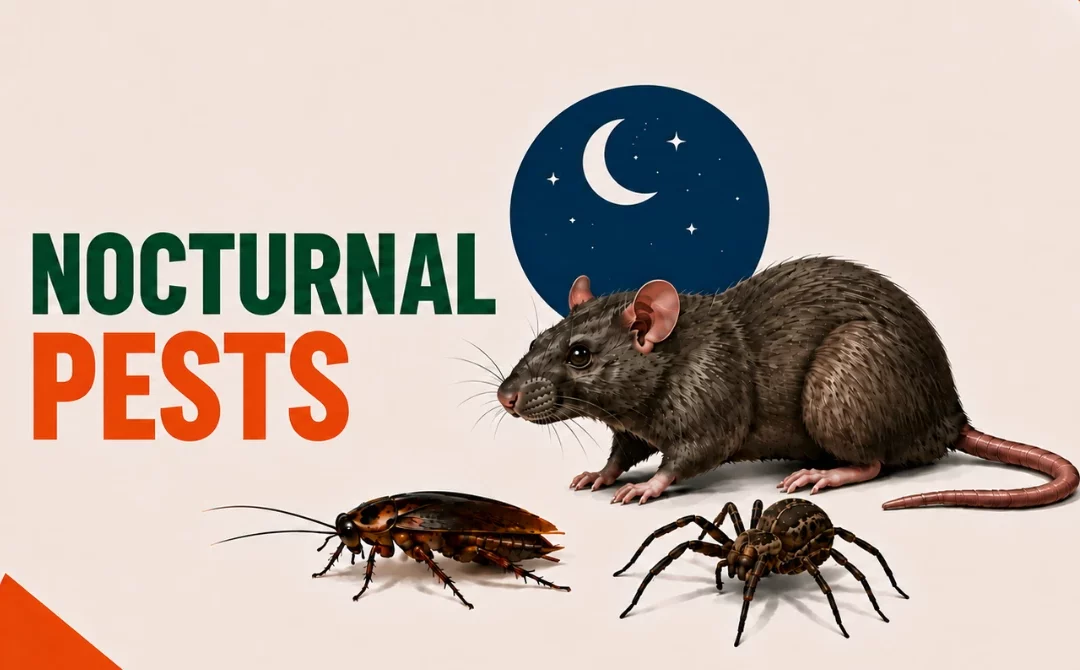
Nocturnal Pests: Bugs That Thrive in the Night and How to Stop Them
When the lights go out and the world quiets down, something else stirs—things you usually don’t notice during the day. That creak in the wall. The scratching in the attic. The itchy bite you wake up with. These aren’t just coincidences—they’re signs you’re not alone after dark.
Some of the most persistent and troublesome pests are nocturnal. They wait until we’re sleeping to search for food, spread germs, and make themselves at home. The tricky part is, many of them go undetected until the damage is already done.
Understanding what kinds of pests thrive at night—and how to stop them—can make all the difference between a peaceful home and an infested one.

TL;DR — Nocturnal Pests: What’s Active at Night and How to Stop Them
Cockroaches — Hide during the day but thrive on moisture, warmth, and food scraps at night. German cockroaches multiply fast and can worsen asthma in kids through allergens and bacteria they leave behind.
Mice and rats — Gnaw through drywall, insulation, and wiring overnight, creating fire risks and spreading disease through droppings and urine. A gap the size of a dime is enough to let them in.
Fleas and ticks — Most active in cooler hours (early morning, evening, overnight). Fleas can carry tapeworms; ticks are a leading cause of Lyme disease and other serious illnesses.
Spiders — Come out at night to hunt from hidden spots like basements and attics. Most are harmless, but venomous species like the brown recluse and black widow can cause serious bites.
Crickets — Drawn to warm, damp areas in late summer and fall. Beyond the noise, they chew through fabric, paper, and glue—and can attract other pests looking for a meal.
Bottom line: Nocturnal pests rely on darkness and quiet to go unnoticed. Sealing entry points, removing food/water sources, and reducing clutter helps—but persistent activity usually calls for professional pest control to find and eliminate the source.

Cockroaches: After-Hours Operators
Cockroaches are about as stealthy as pests come. You might not see them during the day, but flip on a kitchen light late at night and you’ll often catch one scurrying for cover. These bugs are survivors, and they know exactly how to stay out of sight.
- Cockroaches are drawn to moisture, warmth, and any trace of food—crumbs under the fridge, grease near the stove, even glue from cardboard boxes.
- German cockroaches in particular are infamous for making themselves at home in tight crevices and multiplying fast. Once they’re in, they contaminate food surfaces, carry bacteria, and leave behind allergens that can worsen asthma, especially in kids.
Get Professional Cockroach Control
Even a clean home isn’t immune if there are small leaks, open access points, or cluttered spaces. While you can clean up spills and seal cracks to reduce the risk, roaches are resilient. If you’re seeing them regularly, it’s time for professional help. Call your local pest control professional—like the team at Green Pest Management—who can handle infestations using treatments that are effective and pet-safe.

Mice and Rats: Nighttime Gnawers
Rodents are another class of nocturnal pests that rarely show their faces during the day. Mice and rats wait for quiet hours to look for food, build nests, and explore. If you’re hearing sounds in the walls late at night or finding droppings in the pantry, it’s not your imagination.
- What makes rodents especially destructive is their constant gnawing.
- Mice and rats chew through drywall, insulation, and even electrical wiring—which poses a real fire risk.
- Add the diseases rodents can spread through urine and droppings, and you’ve got a health hazard that can’t be ignored.
Why Rodents Are Challenging to Get Rid Of
Rodents are clever about finding ways in. A hole the size of a dime is enough for a mouse to squeeze through. Once inside, they breed quickly and establish entire colonies behind the walls. To get them out, it takes more than a few traps. You need exclusion work, targeted baiting, and ongoing monitoring. Green Pest Management offers that kind of comprehensive approach, using strategies that are safe for families and pets.

Fleas and Ticks: After-Dark Biters
Fleas and ticks don’t follow a strict nocturnal schedule, but they’re most active when it’s cooler—early mornings, evenings, and overnight. If you have pets, you’ve probably seen the signs: scratching, biting, and those tiny specks in the fur or on bedding.
- Ticks lurk in shady areas outdoors, waiting to latch onto anything warm-blooded.
- Fleas jump with astonishing precision and reproduce with alarming speed.
- Both ticks and fleas are more than just annoying—they can transmit real diseases.
- Fleas are known to carry tapeworms.
- Ticks are responsible for Lyme disease, among other serious illnesses.
Keep Ticks and Fleas Away
If you’re finding fleas inside or pulling ticks off your dog, it’s time to take control. Vacuuming regularly, keeping your lawn trimmed, and washing pet bedding helps, but a more aggressive solution is often needed. Green Pest Management, or your local pest control company, can offer a tick yard treatment and help you get rid of fleas using methods that don’t put your pets or kids at risk.

Spiders: Silent Hunters of the Night
Spiders are natural predators, and many species hunt or patrol their webs after dark. While most are harmless and even helpful by feeding on other pests, some are better kept outdoors.
- Venomous spiders like the brown recluse and black widow are rarely aggressive, but their bites can lead to serious medical issues.
- These spiders tend to hide in rarely disturbed areas—garages, basements, attics—and come out at night to feed.
Keep Your Home Spider-Free
If you’re spotting more spiders indoors than usual, it could mean another pest problem is drawing them in.
- Take away their food source and you’ll often take away the spiders, too.
- Keeping clutter low and reducing insect activity helps.
If that doesn’t work, a pest control specialist can target high-risk areas while minimizing chemical exposure.

Crickets: Sleepless Nights
It might sound harmless, but if you’ve ever had a cricket chirping in your bedroom at 2 a.m., you know how irritating they can be.
- Crickets are drawn to warm, damp areas and often enter homes in late summer and early fall.
- Aside from the noise, crickets feed on fabrics, paper, and even glue—causing more damage than you might expect.
- Crickets also serve as a food source for other pests, which means ignoring a cricket problem could lead to something bigger down the line.
Sealing foundation cracks and keeping exterior lights low can help reduce cricket attraction. And if the chirping won’t stop, Green Pest Management can help eliminate the infestation and pinpoint where they’re getting in.

How to Keep Nighttime Pests Out
Nocturnal pests are good at staying hidden, but they’re not unstoppable. Most nighttime pests are looking for three basic things:
- Food
- Water
- Shelter
Take those away, and your home becomes much less appealing.
Start with the basics:
- Fix leaky pipes.
- Seal gaps around doors and windows.
- Store food in airtight containers.
- Keep trash sealed and take it out regularly.
- Clean under appliances.
- Reduce clutter that gives pests a place to hide.
Get Professional Pest Control
But sometimes, no matter how diligent you are, pests still find a way in. That’s when it helps to call in professionals who know the habits of these pests, where they hide, and how to eliminate them without overusing chemicals. Green Pest Management specializes in low-risk, pet-safe treatments designed to solve the problem at the root.

Whether you’re hearing noises in the attic, waking up to bites, or just have a gut feeling something’s off—don’t ignore it. Nocturnal pests rely on silence and darkness to thrive. Shine a light on the problem, take action early, and reclaim your home before they dig in deeper.
Centers for Disease Control and Prevention (CDC) – Fleas & Ticks: https://www.cdc.gov/fleas/about/, https://www.cdc.gov/ticks
Centers for Disease Control and Prevention. (2025). About Fleas. https://www.cdc.gov/fleas/about/index.html
Centers for Disease Control and Prevention. (2024, April 8). Controlling wild rodent infestations. https://www.cdc.gov/healthy-pets/rodent-control/
Environmental Protection Agency. (2015). Integrated Pest Management (IPM) Principles. https://www.epa.gov/safepestcontrol/integrated-pest-management-ipm-principles
Mississippi State University Extension Service. (n.d.). Brown Recluse and Black Widow Spiders. https://extension.msstate.edu/publications/spiders-brown-recluse-and-black-widow
University of California Statewide IPM Program. (n.d.). Spiders — Pests of Home, Garden, Landscape, and Turf. https://ipm.ucanr.edu/PMG/invertebrates/links.spiders.html