
Gnats vs. Fruit Flies: What’s the Difference?
How To Tell If It’s a Fruit Fly or Gnat
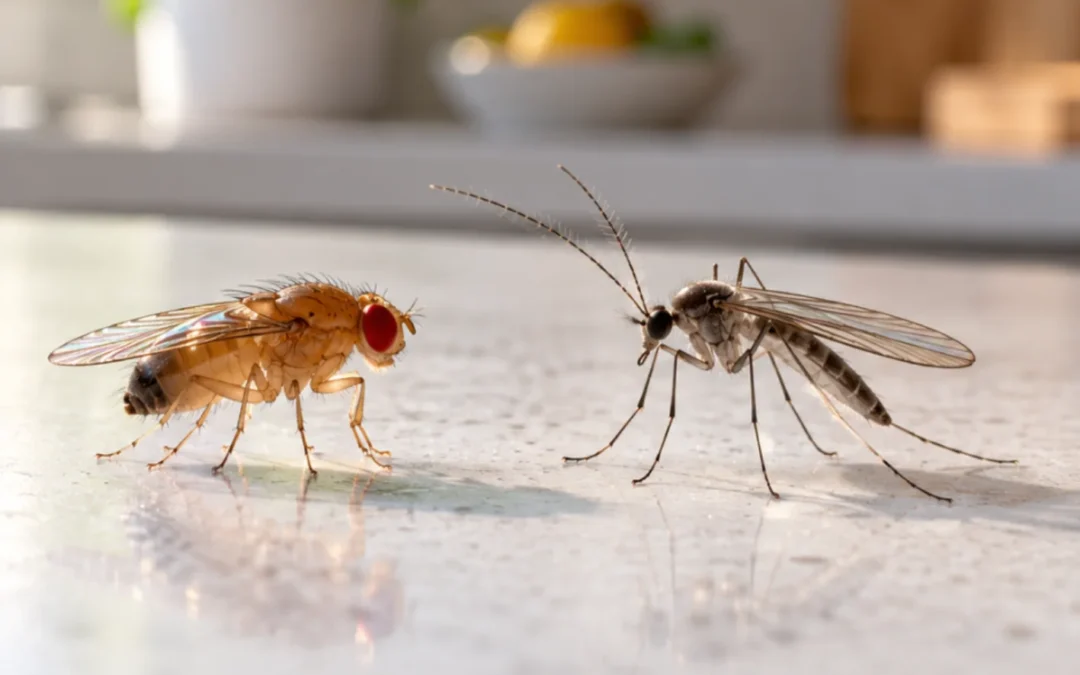
The difference between gnats and fruit flies is mainly where you find them and how they look. Fruit flies are usually tan or brown, often with red eyes, and gather around ripe fruit, food scraps, spills, and garbage or recycling bins. Gnats, most often fungus gnats in homes, are dark and slender and hover around houseplants, especially when the soil stays wet.
Tiny Flies That Keep Coming Back
Tiny flies buzzing around your kitchen or houseplants can get annoying pretty quickly. You swat them away, clean the counter, and somehow they’re still there the next day. Before long, you’re wondering where they’re coming from and how to get rid of them.
Gnats or Fruit Flies?
If you’ve got tiny flying bugs in your house, they could be gnats or fruit flies. They look similar, but they usually show up in different places. Figuring out which one you have is the first step to getting rid of them.
TL;DR: Gnats and fruit flies look similar, but where you find them is the biggest clue to which one you have and how to get rid of it.
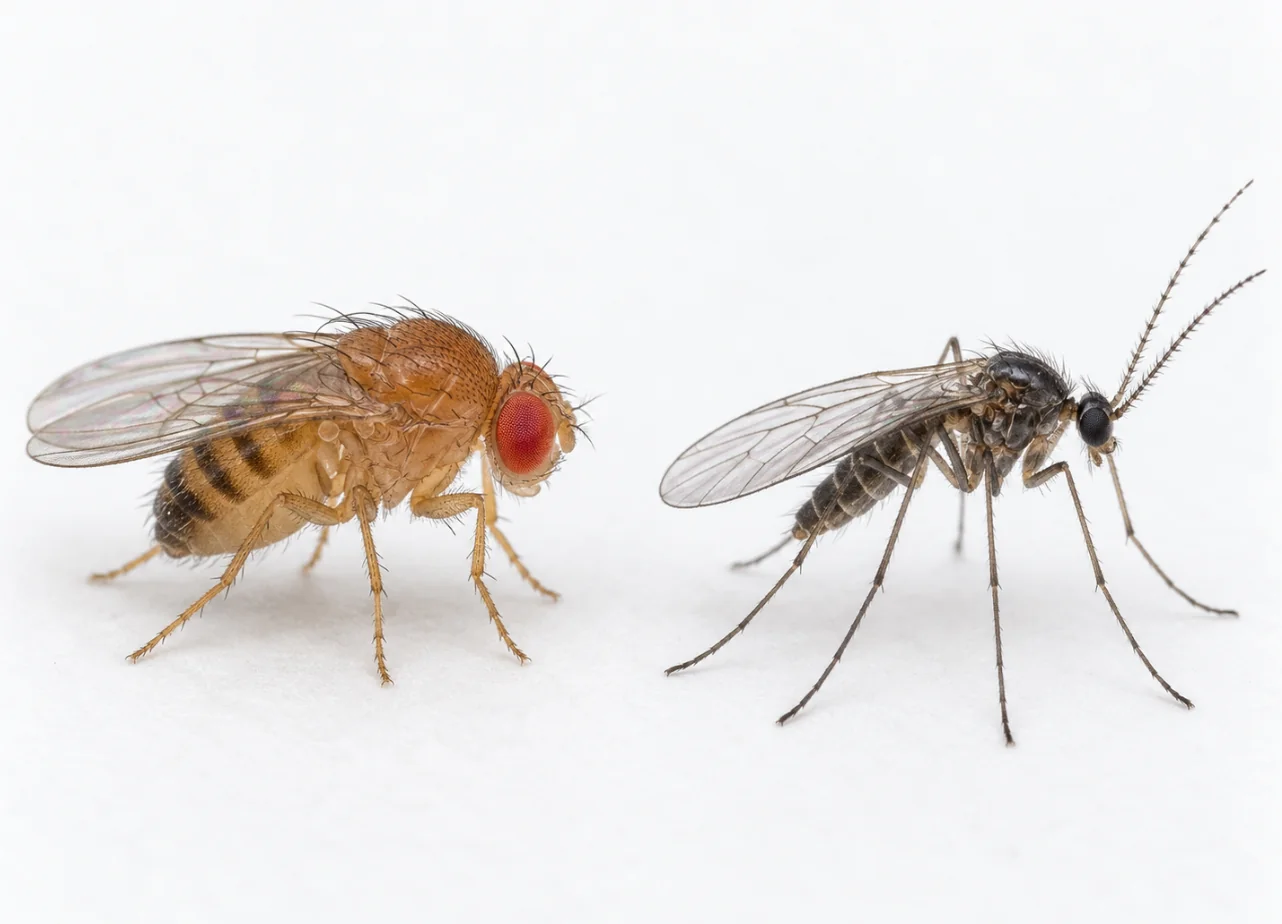
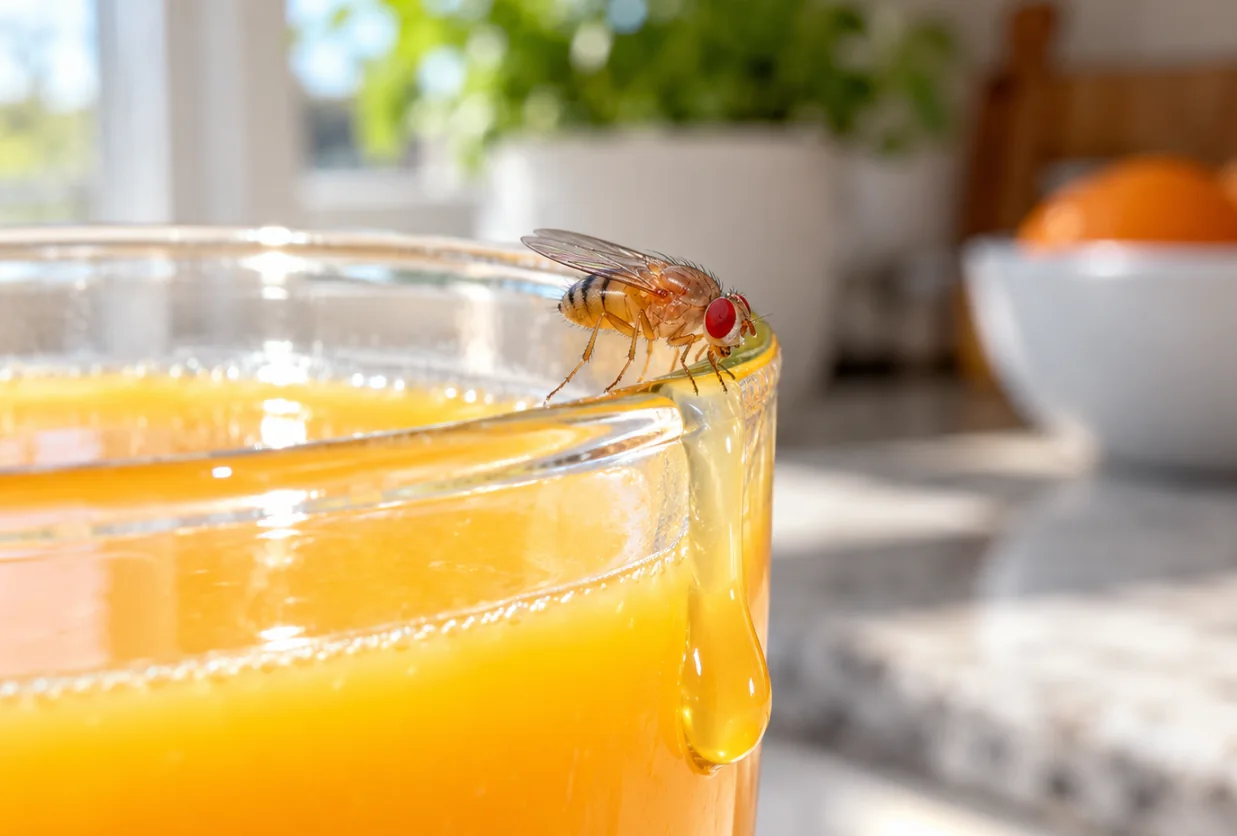
- Fruit flies: usually tan or brown, often with red eyes. They gather around ripe fruit, vegetables, garbage cans, sticky spills, and recycling bins.
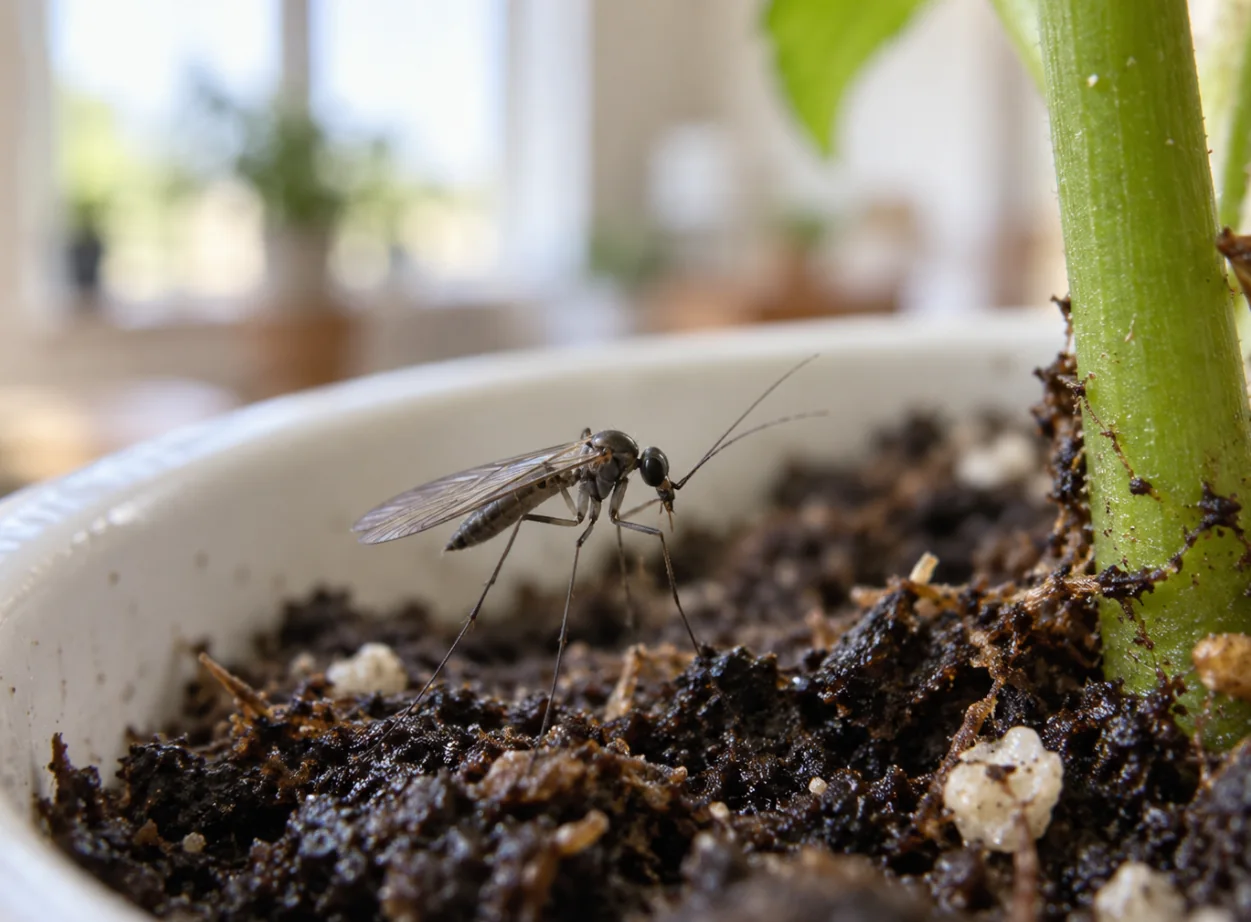
- Gnats: the article focuses on fungus gnats, which are dark and slender and hover around houseplants and nearby windows, especially when the soil is wet.
- Why fruit flies come in: ripe produce, food scraps, spilled juice, and sugary drinks. Even a little food residue can be enough.
- Why fungus gnats come in: soil that stays too wet. Their young live in the soil and feed on fungi and decaying plant material.
- Getting rid of fruit flies: throw away overripe fruit, wipe counters, clean spills, empty the garbage, and check recycling. An apple cider vinegar and dish soap trap can help, but only if you also remove the breeding source.
- Getting rid of fungus gnats: let the top layer of soil dry between waterings when appropriate, make sure pots drain, and use yellow sticky traps to catch adults. Traps won’t remove the young in the soil.
- Prevention: keep ripe fruit in the refrigerator, rinse containers before recycling, avoid overwatering, and check new plants for gnats before bringing them home.
- When to call a pro: if the flies keep coming back, there may be a hidden breeding spot, or you may have drain flies or another look-alike. Green Pest Management can help identify the insect and recommend treatment.
How Can You Tell Gnats and Fruit Flies Apart?
How to Identify Fruit Flies
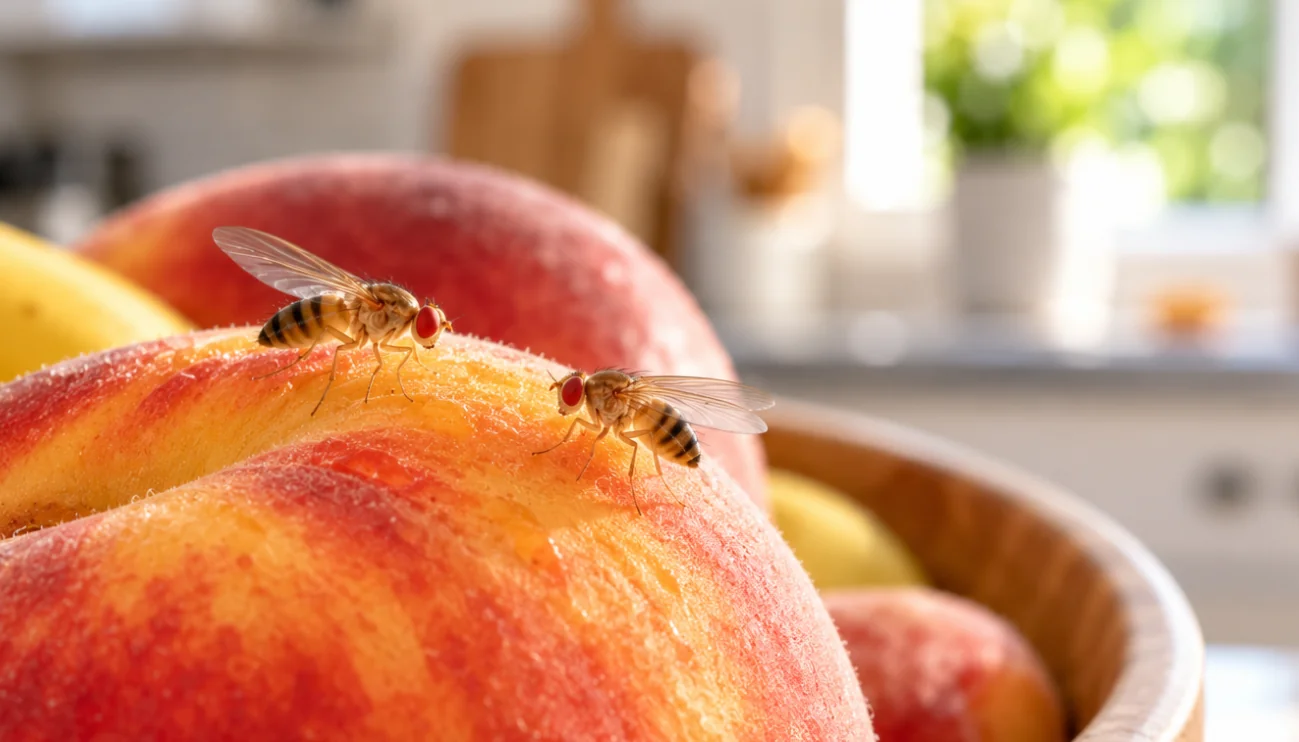
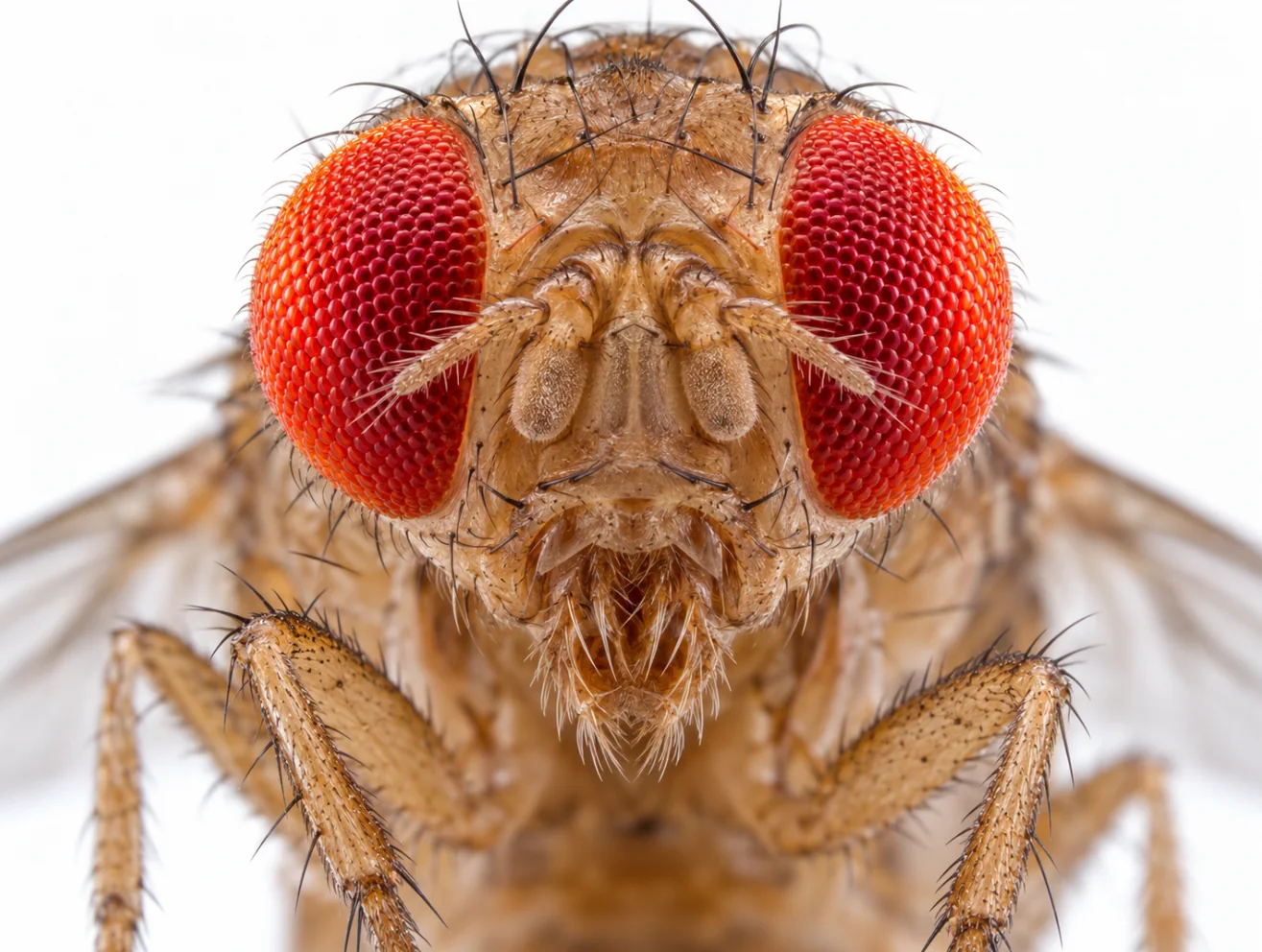
Fruit flies are usually tan or brown and often have red eyes. You’ll typically find them around ripe fruit, vegetables, garbage cans, or sticky spills. That forgotten banana on the counter might be the reason they’re hanging around.
How to Identify Fungus Gnats
Gnats can refer to several kinds of small flies, but fungus gnats are common in homes with houseplants. They’re usually dark and slender, and you’ll often see them flying around plant pots or sitting on nearby windows.
Where They Gather Is the Clue
A quick way to narrow it down is to look at where the bugs are gathering.
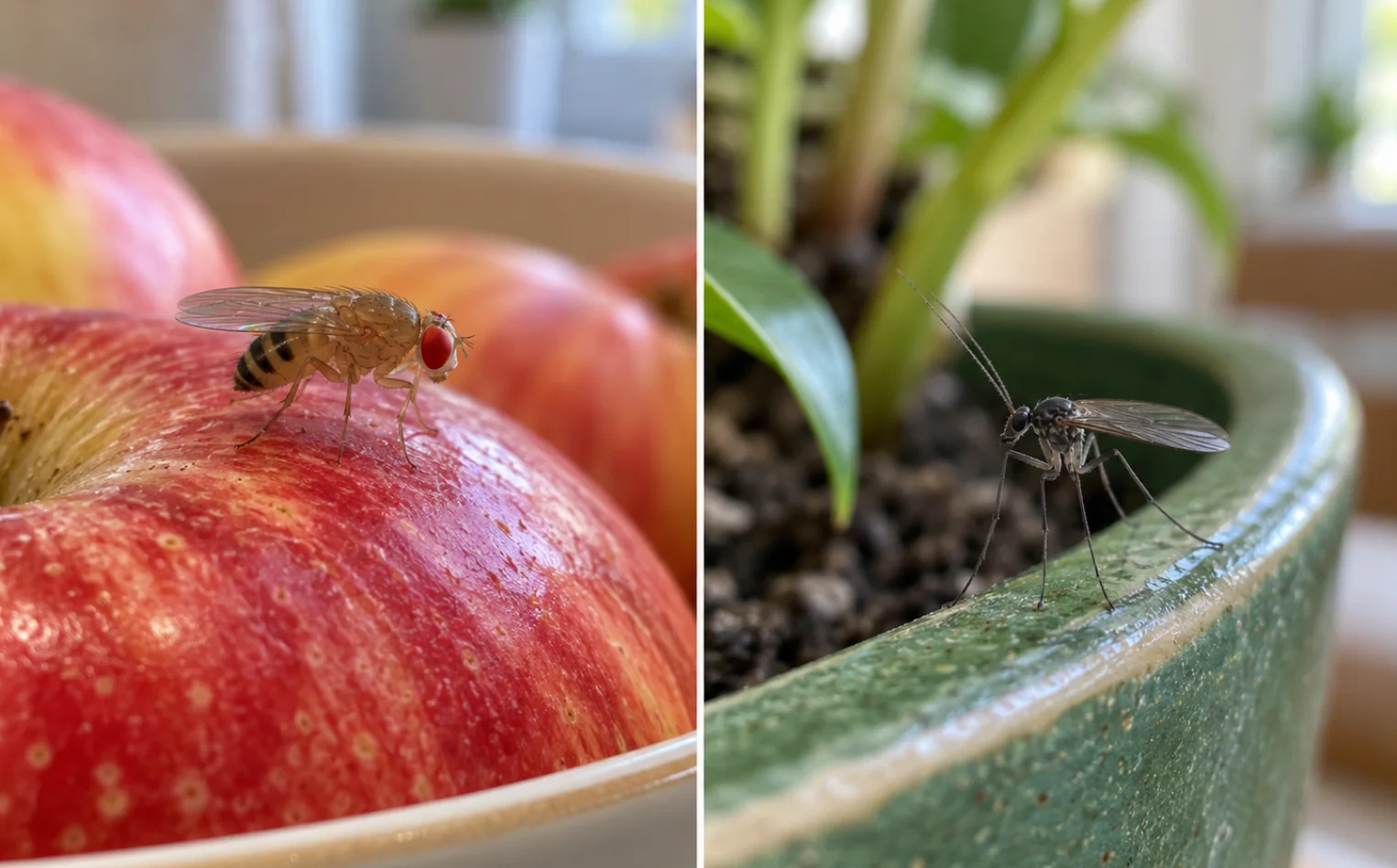
- If they’re hanging around your fruit bowl or kitchen trash, they may be fruit flies.
- If they’re hovering around your houseplants, especially when the soil is wet, they’re more likely to be fungus gnats.
Why Are They Showing Up in Your House?
What Attracts Fruit Flies
Fruit flies are attracted to:
- Ripe produce
- Food scraps
- Spilled juice
- Sugary drinks
They can also breed in garbage cans and recycling bins where leftover food or liquid has collected. You don’t necessarily have to have a messy kitchen to end up with them. Sometimes, a little food residue is all it takes.
Why Fungus Gnats Show Up
Fungus gnats are usually a sign that your plant soil is staying too wet. Their young live in the soil and feed on fungi and decaying plant material. If you’re watering your plants frequently and the soil never dries out, you’re giving them a good place to multiply.
Removing the Source Matters
The University of Maryland Extension’s fruit fly guide explains why removing their food sources is important for controlling fruit flies. With fungus gnats, dealing with overly damp soil is just as important as catching the adults.
How to Get Rid of Fruit Flies
Remove What Attracts Them
Start by getting rid of anything that’s attracting them:
- Throw away overripe fruit
- Wipe down your counters
- Clean up spills
- Empty the garbage
Check your recycling bin, too, since leftover drinks can attract fruit flies.
Apple Cider Vinegar Trap
You can also try a simple trap made with apple cider vinegar and a drop of dish soap. The vinegar attracts the flies, and the soap helps trap them.
Why Traps Aren’t Enough
Just keep in mind that traps won’t fix the problem if fruit flies are still breeding somewhere in your kitchen. You need to remove the source, or you’ll keep catching flies while new ones take their place. It’s a bit like mopping the floor while the tap is still running.
How to Get Rid of Gnats in Houseplants
Check the Soil and Drainage
If the bugs seem to be coming from your plants, check the soil. Fungus gnats love damp potting mix, so let the top layer dry between waterings when it’s appropriate for your plant. Make sure your pots drain properly and aren’t sitting in water.
Yellow Sticky Traps
Yellow sticky traps placed near your plants can catch adult gnats and help you see whether their numbers are going down. However, they won’t get rid of the young living in the soil, so changing your watering habits is important.
Why Moist Soil Supports Gnats
The University of Maryland Extension’s fungus gnat guide explains how moist soil supports the fungi that fungus gnat larvae feed on. If you keep seeing gnats around your plants, check your watering routine before buying another product.
When Should You Call Pest Control?
When to Suspect a Hidden Fly Breeding Spot
Most small gnat and fruit fly problems can be handled by cleaning up food sources or fixing the conditions that attract them. But if they keep coming back, there may be a breeding spot you’ve missed.
Drains and Look-Alike Flies
Fruit flies can sometimes come from food residue in drains or other hidden areas. You could also have drain flies or another type of small fly that looks similar but needs a different approach.
Professional Help and Pet Safety
If you’ve tried the usual fixes and still can’t get rid of them, call your local pest control professional, like the team at Green Pest Management. They can help identify the insect, track down possible breeding areas, and recommend the right treatment. If you have pets, ask which products will be used and what precautions you should take to keep them safe.
Flea and Tick Treatments
Green Pest Management may also offer flea control and tick yard treatments. If you’re dealing with fleas inside your home or ticks in your yard, ask about available services and the precautions recommended for your pets.
How to Keep Them From Coming Back
Once you’ve gotten rid of the flies, a few small changes can help prevent another round:
- Keep ripe fruit in the refrigerator
- Wipe up spills
- Empty your garbage regularly
- Rinse food and drink containers before recycling them
For houseplants, avoid watering more than necessary and make sure excess water can drain away.
Check New Plants for Gnats
It’s also worth checking new plants for gnats before bringing them home. Otherwise, you might accidentally bring the problem inside yourself.
If the Flies Return
If the flies return, don’t just keep swatting them and hoping for the best. Look for where they’re coming from and deal with that first. Otherwise, you may find yourself dealing with the same problem all over again.
The Bottom Line
Where You Find Them Is the Clue
The biggest clue in the gnats vs. fruit flies debate is usually where you find them.
- Fruit flies tend to gather around ripe fruit, food scraps, and garbage.
- Fungus gnats are more likely to hang around damp houseplant soil.
Managing Both Gnats and Fruit Flies
Both can usually be managed by removing what attracts them and using traps when needed. If they keep coming back or you’re not sure which insect you’re dealing with, Green Pest Management can help you identify the problem and discuss your options.
After all, your fruit bowl should be for fruit, and your houseplants should be the only things growing in their pots.
Gnats vs. Fruit Flies: Questions & Answers
How to Get Rid of Gnats in Your House
To get rid of gnats in your house, find what they are breeding in and remove it. For fungus gnats, let the top layer of potting soil dry between waterings and make sure pots drain freely. Yellow sticky traps can catch adults, but they will not touch the larvae in the soil, so fixing the moisture is what ends the problem. If the gnats are hovering near the kitchen instead, check for ripe produce, drains, and trash, and call a pest control professional if they keep returning.
Where Do Gnats Come From?
Gnats come from damp, organic places where they can lay eggs, and they often arrive without you noticing. Fungus gnats develop in moist potting soil, and they can enter a home on new plants or through open doors and windows. Other small flies called gnats breed in drains, compost, garbage, and rotting produce. Their young then feed on fungi or decaying material, which is why a single wet spot can produce a steady stream of adults.
What Attracts Gnats?
Gnats are attracted to moisture, decaying organic matter, and food residue. Fungus gnats are drawn to constantly damp soil that supports the fungi their larvae eat, while fruit flies and drain flies go for ripe fruit, sugary spills, and the gunk inside drains. Light can also draw adult gnats toward windows and lamps. Letting soil dry out, cleaning up spills, and emptying trash regularly removes most of what pulls them in.
Are Gnats and Fruit Flies the Same?
No, gnats and fruit flies are not the same, though people often confuse them. “Gnat” is a loose term for several kinds of tiny flies, including fungus gnats, while fruit flies are a specific group that feeds on fermenting fruit and sugary liquids. Fruit flies are usually tan or brown with red eyes, and fungus gnats are dark and slender. Where you see them is the easiest clue: fruit flies gather near produce and trash, and fungus gnats hover around houseplants.
Do Fruit Flies Bite Humans?
No, fruit flies do not bite humans. Their mouthparts are built for sponging up soft, fermenting foods and liquids, not for piercing skin. They are still a nuisance because they can pick up bacteria from garbage and drains and spread it onto food and surfaces. If you feel bites near your houseplants or windows, the cause may be a different insect, such as a biting midge or another type of gnat.
Sources
- University of Maryland Extension. “Fruit Flies.” https://www.extension.umd.edu/resource/fruit-flies
- University of Maryland Extension. “Fungus Gnats.” https://www.extension.umd.edu/resource/fungus-gnats
- U.S. Environmental Protection Agency. “Integrated Pest Management Principles.” https://www.epa.gov/safepestcontrol/integrated-pest-management-ipm-principles