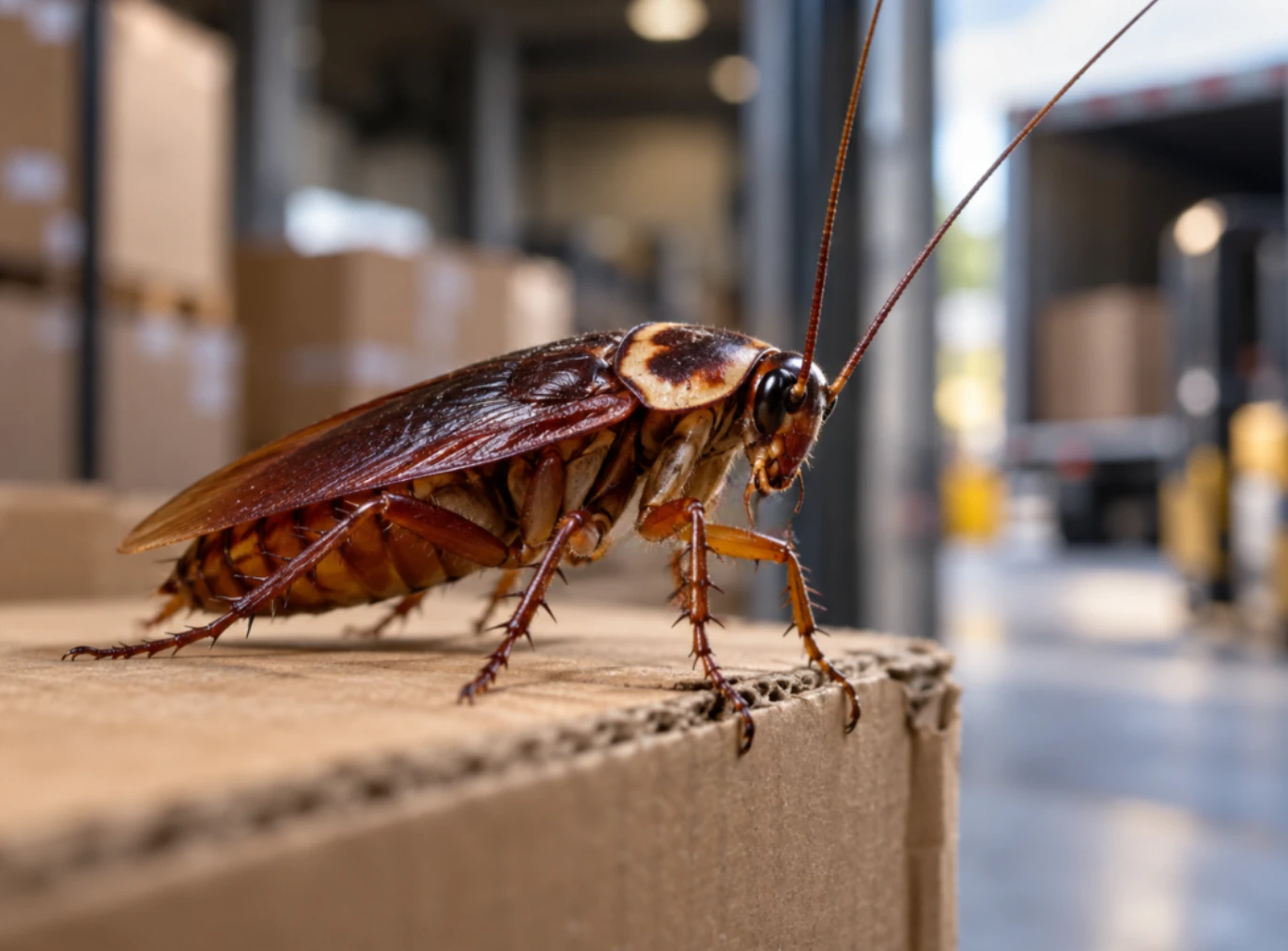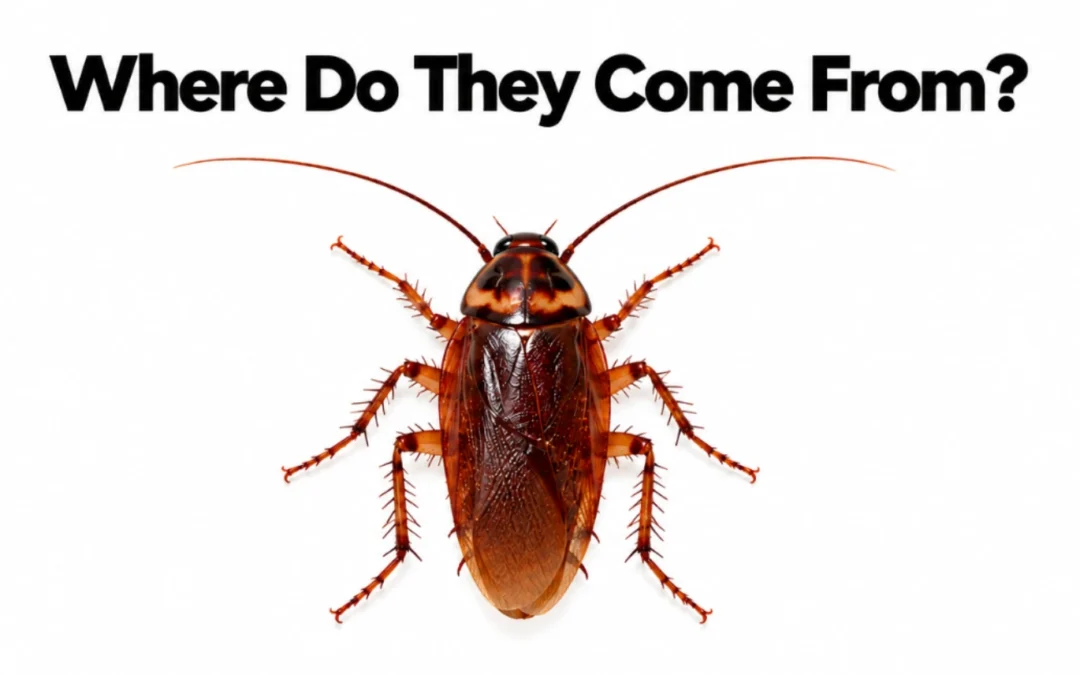
Roaches 101: Do Cockroaches Fly, Can They Bite & Where Do Roaches Come From?
Cockroaches are among the most recognizable household pests, known for their quick movements, flattened bodies, and ability to hide in surprisingly narrow spaces. While most people associate roaches with kitchens, bathrooms, and dark corners, these insects also live outdoors in gardens, forests, and other natural habitats. Only a relatively small number of cockroach species regularly become pests inside homes.
Cockroaches: TL;DR
- Do cockroaches fly? Some do, but few species and not well. The American cockroach glides, the Asian cockroach flies readily toward lights, and German and Oriental cockroaches rarely or never fly.
- Do cockroaches bite? Yes, but rarely, and mostly in heavy infestations when food is scarce. They don’t sting and aren’t venomous.
- Where do cockroaches come from? Warm, damp outdoor spots like sewers, woodpiles and mulch. The household species spread worldwide on ships and cargo.
- How can roaches get in your house? Through cracks, pipe gaps, drains, doors and vents, or by hitchhiking in boxes, grocery bags and used items.
- Why do cockroaches suddenly appear? Usually a hidden group became visible, or a leak, crumbs, a weather swing or a neighbor’s treatment pushed them your way.
- Why are they called cockroaches? English speakers reshaped the Spanish “cucaracha” into “cockroach” in the early 1600s, and neither word relates to the insect.
- Do cockroaches carry diseases? They can carry germs like Salmonella, though specific outbreaks are hard to link to them. Their bigger health impact is allergens that trigger asthma.
- Are roaches dangerous? Not directly. The real risks are contaminated food and surfaces, and allergy and asthma flare-ups, especially in children.
- Keeping them out: remove food and water, seal gaps, and inspect boxes and secondhand items. Call a professional if you see them in the daytime, in several rooms, or with droppings or egg cases.
Interesting Facts About Cockroaches
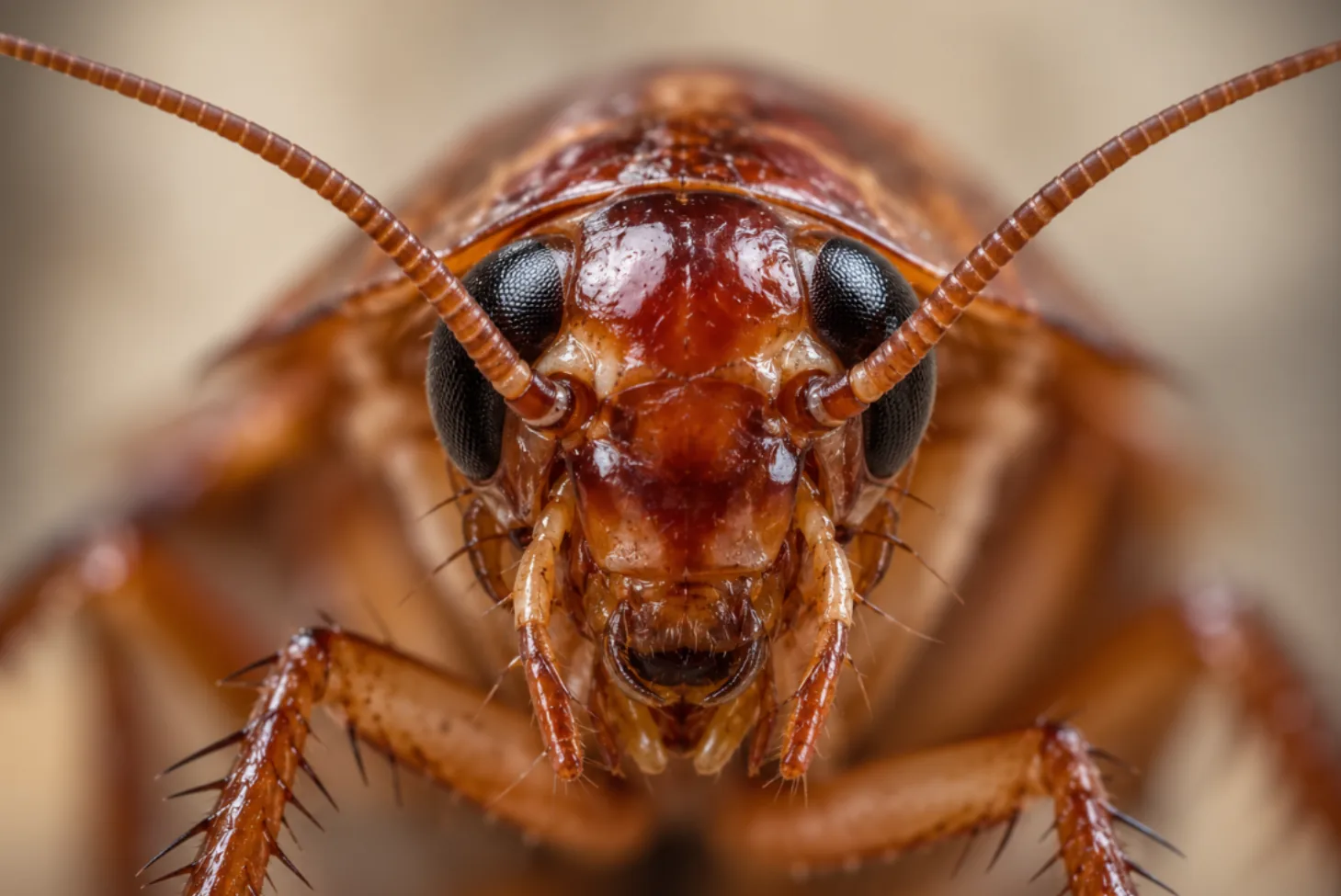
Did you know that some cockroaches can fly, while others have wings they rarely use? Certain species can produce hissing sounds, and young cockroaches look like miniature versions of adults rather than wormlike larvae. Cockroaches also have sensory structures that help them detect sudden air movements and escape danger remarkably quickly.
Despite their reputation, cockroaches do not normally bite people, and most species prefer to avoid human contact. However, household infestations can create genuine concerns, particularly because cockroach allergens may trigger allergic reactions and asthma symptoms.
Why Do Cockroaches Enter Homes?
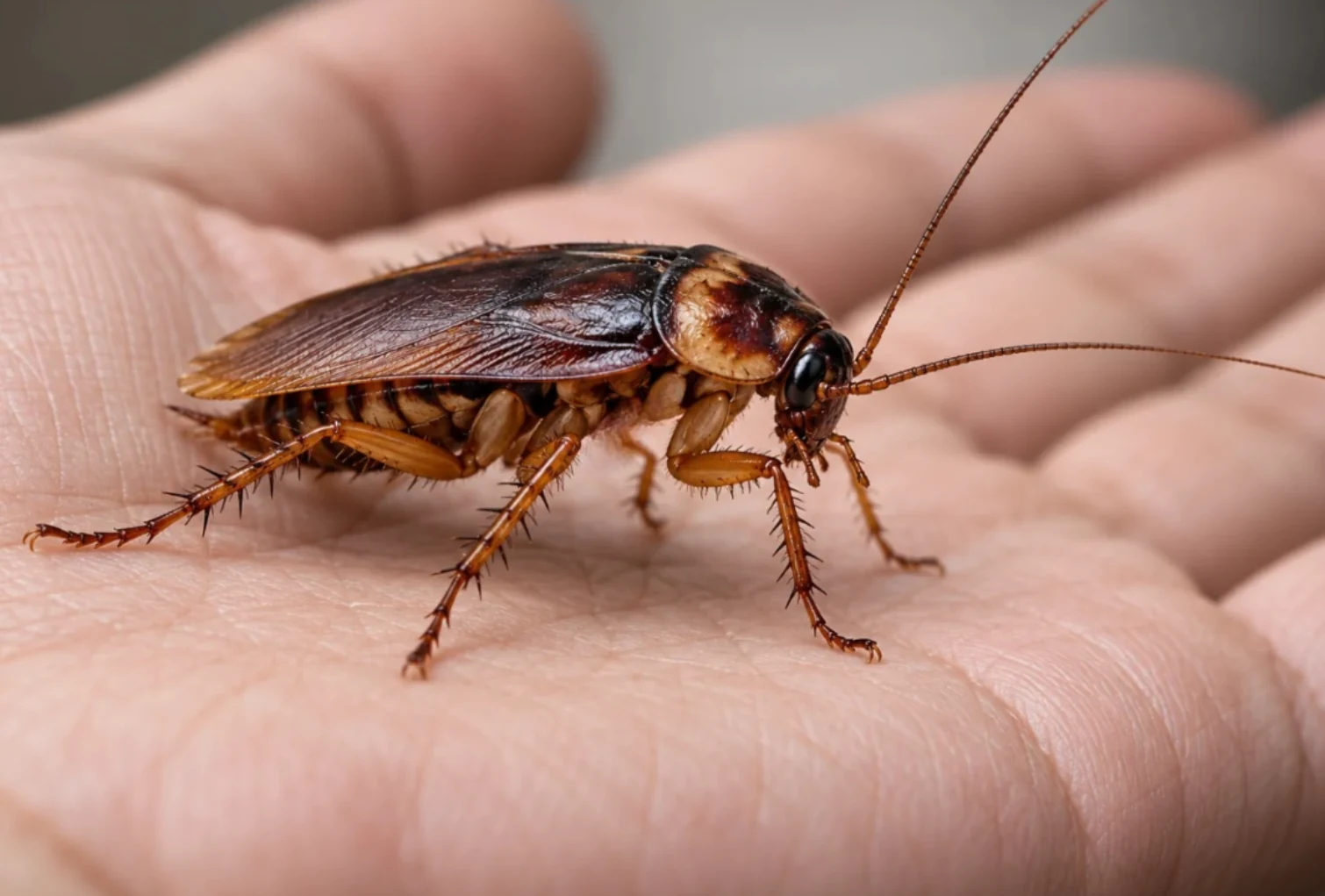
Cockroaches often enter buildings in search of food, moisture, warmth, and protected hiding places. Some crawl inside through gaps around doors, foundations, and plumbing, while others arrive unnoticed in cardboard boxes, used appliances, or other belongings.
Finding a single cockroach does not always mean a home is infested, but repeated sightings, droppings, shed skins, or egg cases may indicate an established population. Understanding how cockroaches behave, where they come from, and what attracts them can help homeowners recognize problems early and take steps to prevent infestations.
Do Cockroaches Fly?
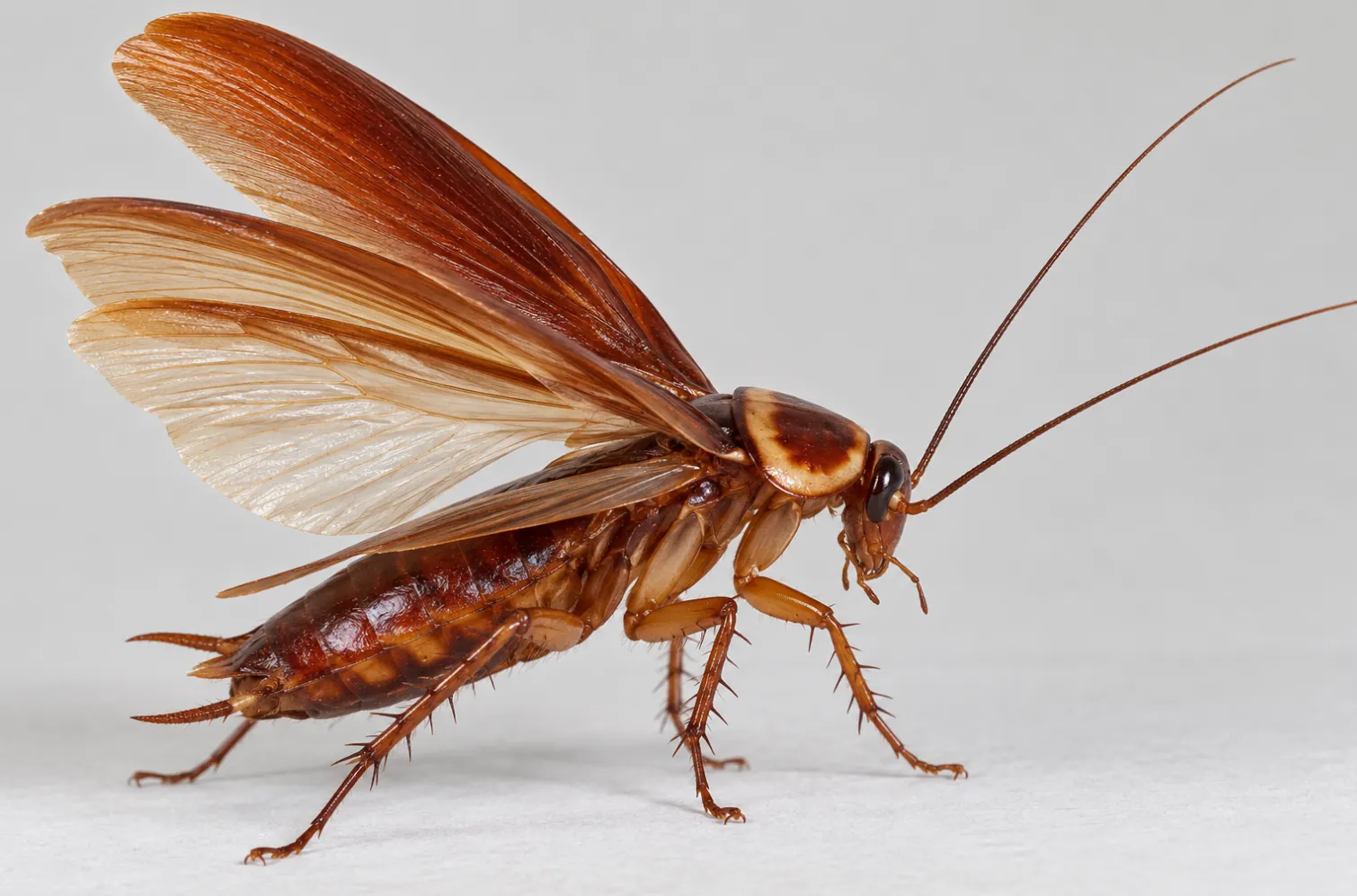
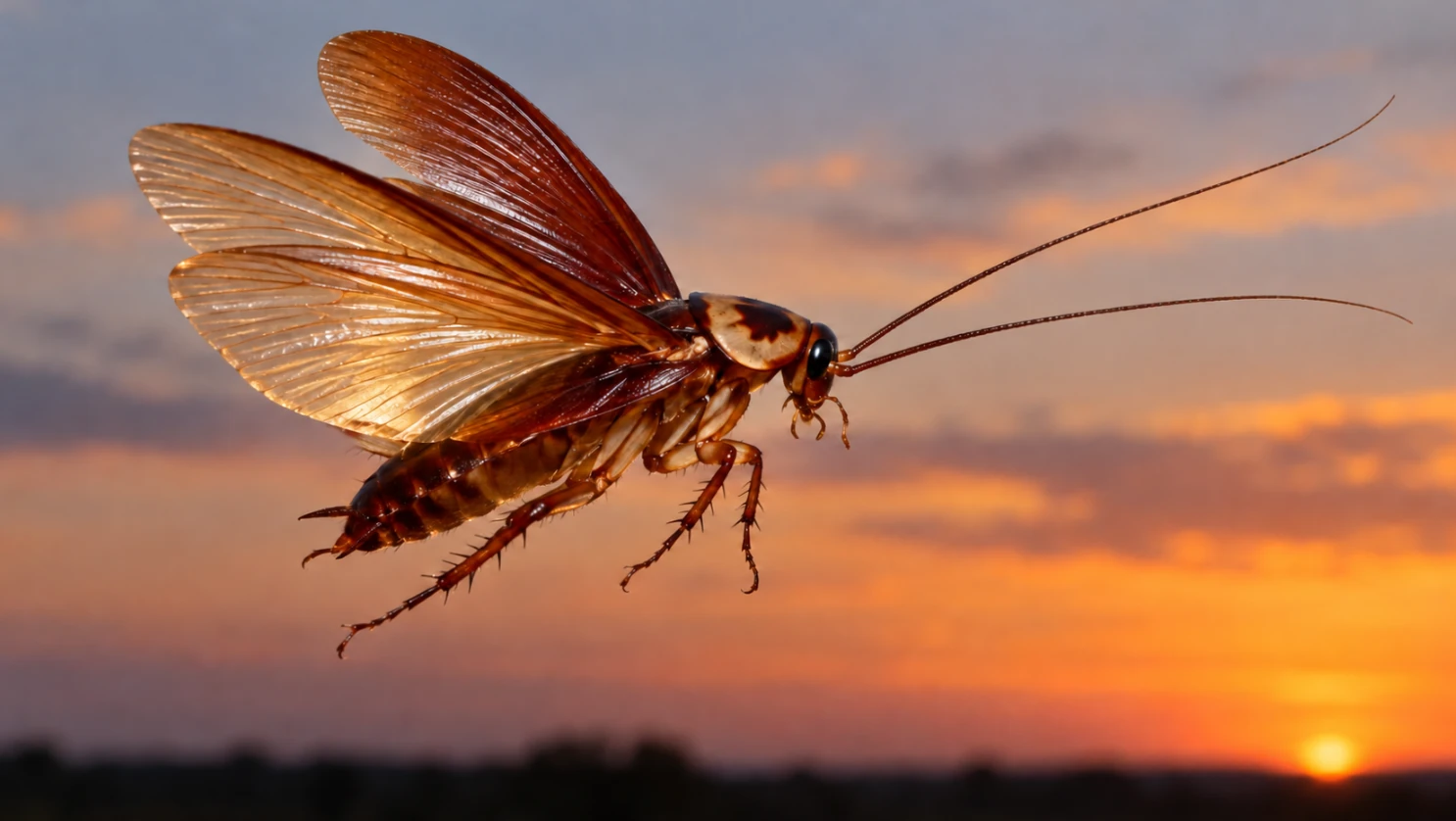
Yes, some cockroaches can fly, but their flying abilities vary by species. Although many adult roaches have wings, not all can use them for flight. Some, like Asian and smokybrown cockroaches, are capable of active flight, while others, such as American cockroaches, may fly short distances or glide, especially in warm conditions. German cockroaches have developed wings but rarely use them, and Oriental cockroaches cannot fly. Most household roaches rely on their legs to escape danger, search for food, and move between hiding places.
Which Cockroaches Can Fly?
| Cockroach Species | Flying Ability |
|---|---|
| American cockroach | Can fly short distances or glide |
| Asian cockroach | Strong flier; flies frequently |
| Smokybrown cockroach | Capable of active flight |
| German cockroach | Winged but rarely flies |
| Oriental cockroach | Cannot fly |
Which US-Common Cockroaches Can Fly?
American cockroach
- The big reddish-brown roach most people picture, and the one best known for flying.
- It glides down from trees, ledges and roofs more than it flies up from the ground.
- Indoors it mostly runs, and it seldom uses its wings inside a building.
Asian cockroach
- Looks almost identical to the German cockroach, but behaves very differently.
- It flies readily and is strongly drawn to lights, so it may swarm toward porch lights and lit windows at night.
- It lives mainly outdoors, in mulch, leaf litter and lawns, and is mostly found in the southeastern states.
Smokybrown cockroach
- Adult smokybrown cockroaches can fly, and they are one of the more capable fliers.
- They are common in warm southern states, especially around mature trees.
Which Cockroaches Cannot Fly?
- German cockroaches have wings but almost never use them. At most, they glide a short distance.
- Oriental cockroaches do not fly. Females have only tiny wing stubs.
- Nymphs of every species have no wings. A roach with wings is an adult.
Do cockroaches bite?
Yes, cockroaches bite, but it is rare. In most cases, roaches are not aggressive and they avoid people, so a bite is more of a last resort than an attack. They have chewing mouthparts, they do not sting, and they are not venomous.
Do cockroaches bite people?
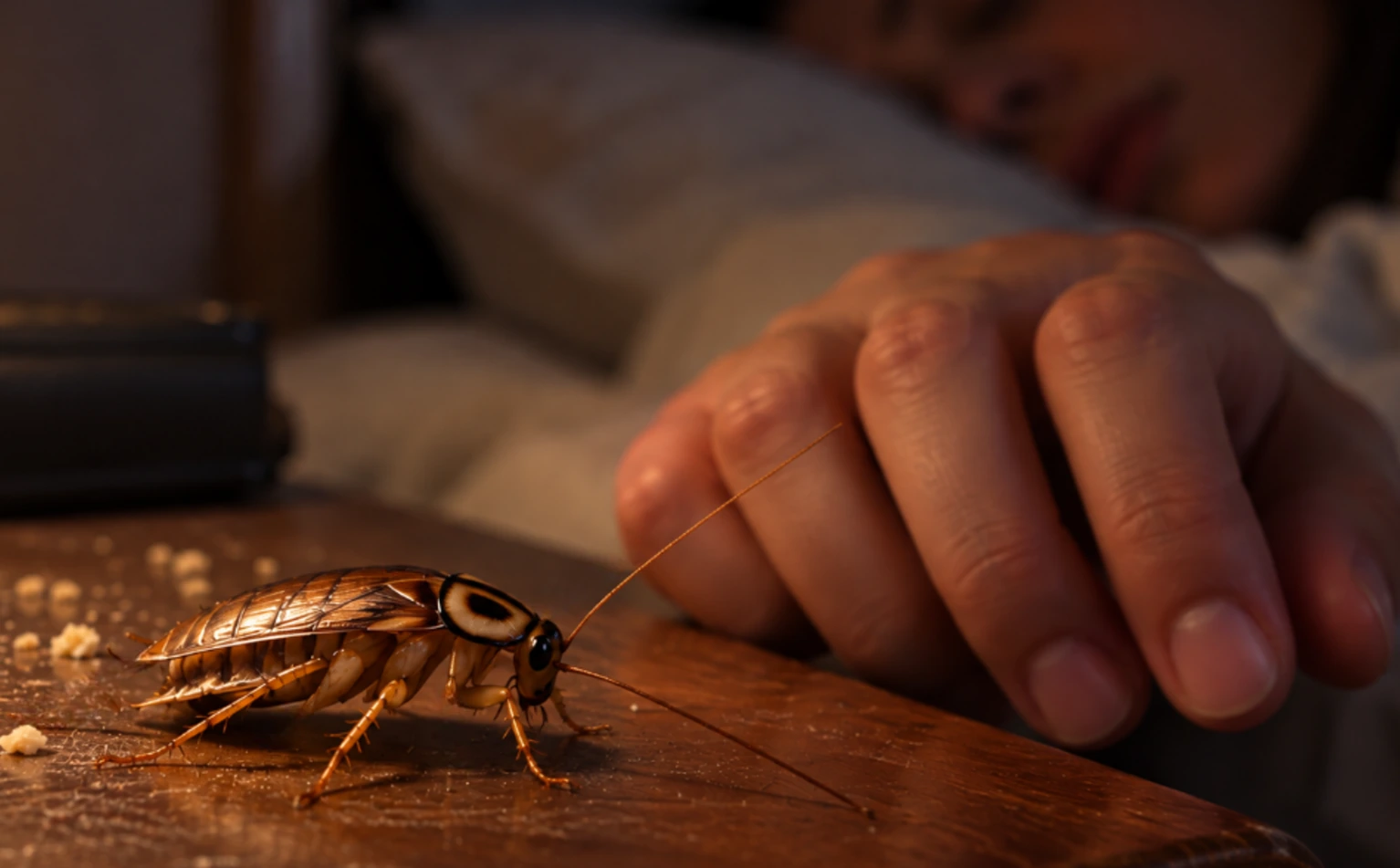
Yes, there are documented cases of roaches nibbling on people, mostly while the person slept. The usual targets are small, easy spots: fingernails, eyelashes, calloused skin on hands and feet, and dead skin. They may also be drawn to food residue left around the mouth or on fingers.
Of the common US house roaches, the American and German cockroach are the ones most often linked to bites.
When are cockroach bites most likely?
- In heavy infestations, where there are far more roaches than hiding places and food.
- When food is scarce, because roaches that cannot find crumbs may try other sources.
- At night, since roaches are nocturnal and most active while people sleep.
- In rooms with food residue, such as a bedroom where people snack or a kitchen floor with spills.
Where do cockroaches come from?
Most roaches start out in warm, damp, sheltered places outdoors, then move inside when they find food, water and a place to hide. Cockroaches as a group are ancient insects that have been around for hundreds of millions of years, and the household species spread across the world on ships and cargo.
Where do roaches live outside?
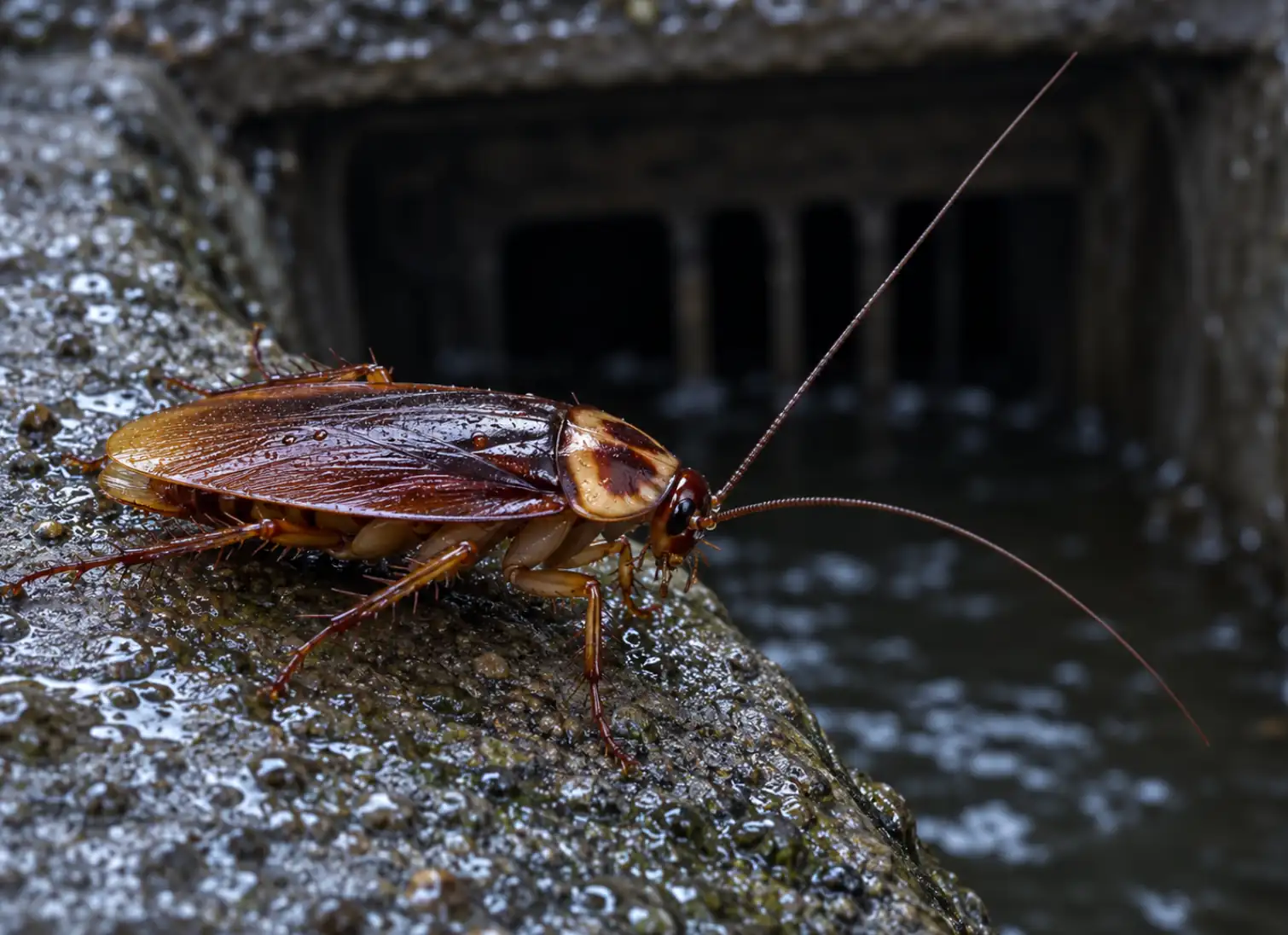
- Sewers and storm drains
- Woodpiles and piles of leaves or debris
- Mulch, compost and garden beds
- Tree hollows and palm trees in warm climates
- Under stones, stairs and the edges of foundations
What these places share is moisture, warmth and cover from light, which is exactly what roaches want.
| Trigger | Why Roaches Come |
|---|---|
| Leaky pipe | Water |
| Crumbs, pet food | Food |
| Cold snap | Warmth |
| Heavy rain | Dry shelter |
| Neighbor’s treatment | New home |
| New box or bag | A ride in |
How Does a Cockroach Infestation Start?
- A few roaches arrive. They come in from outside, from a neighbor, or inside a box or used item.
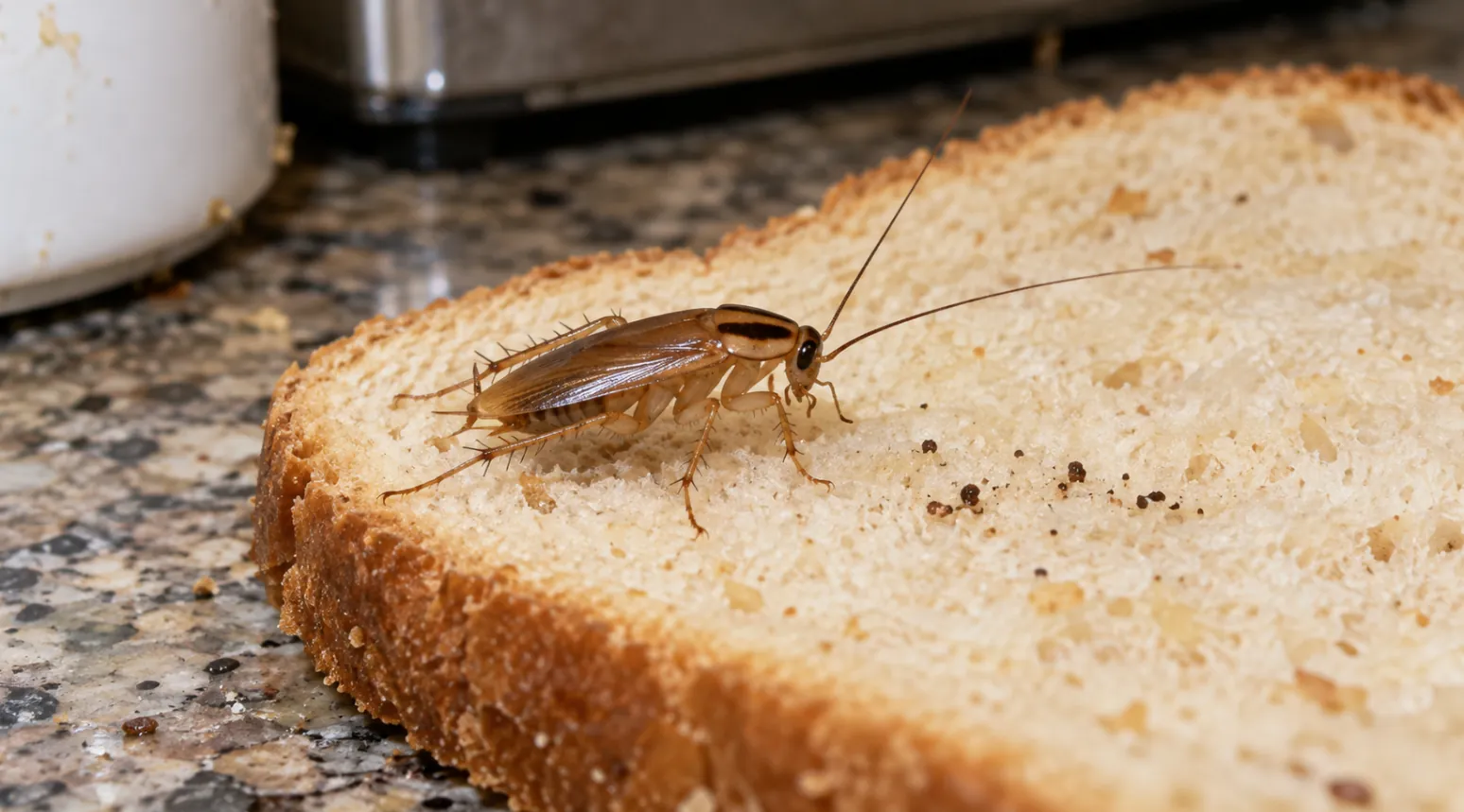
- They find what they need. Crumbs, a leaky pipe and a dark gap are usually enough.
- They multiply quickly. Some species, such as the German cockroach, can produce several generations in a year, so a small group can turn into a large one.
- They stay hidden. Roaches are nocturnal and spend the day in cracks and voids, so an infestation can go unnoticed for weeks.
How Can Roaches Get in Your House?
Cockroaches get in your house by walking through small openings or by being carried in. Their flat bodies let them slip through gaps that look far too narrow, and they are just as likely to arrive in a cardboard box as through a crack in the wall.
Common Roach Entry Points
Cracks and gaps
- Cracks in foundation walls and floors
- Gaps around windows, doors and baseboards
- Spaces where utility lines enter the house
Plumbing and drains
- Gaps around pipes under sinks and behind dishwashers and washing machines
- Floor drains and sewer connections, especially for American cockroaches
Doors, windows and vents
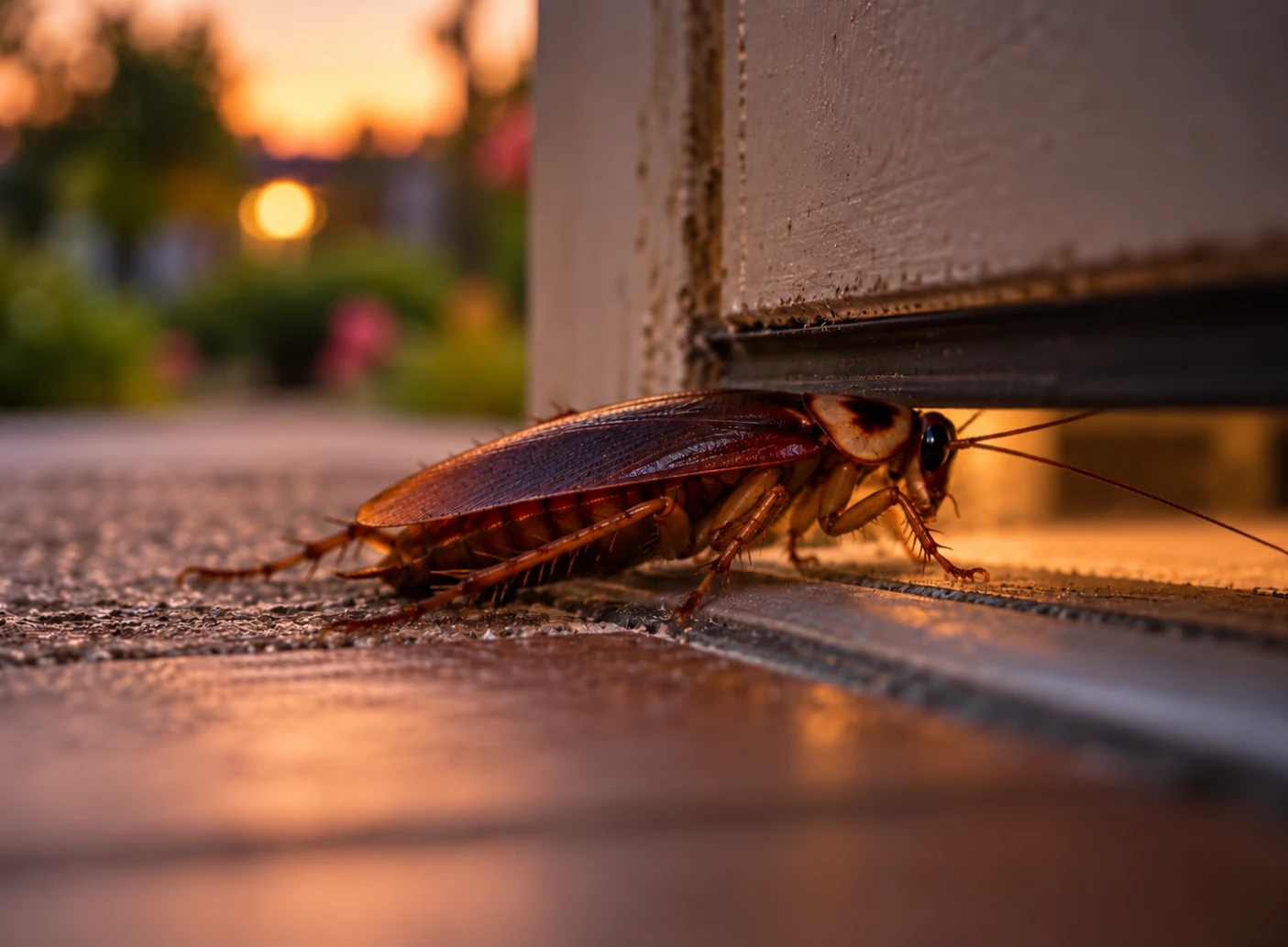
- Gaps under doors and worn weatherstripping
- Torn screens and open windows
- Vents, and open garage or basement doors
Neighboring homes
In apartments and attached homes, roaches can travel between units through shared walls, pipes and wiring. A neighbor’s infestation can become yours.
How roaches hitchhike inside
- Cardboard boxes and packages from deliveries or storage
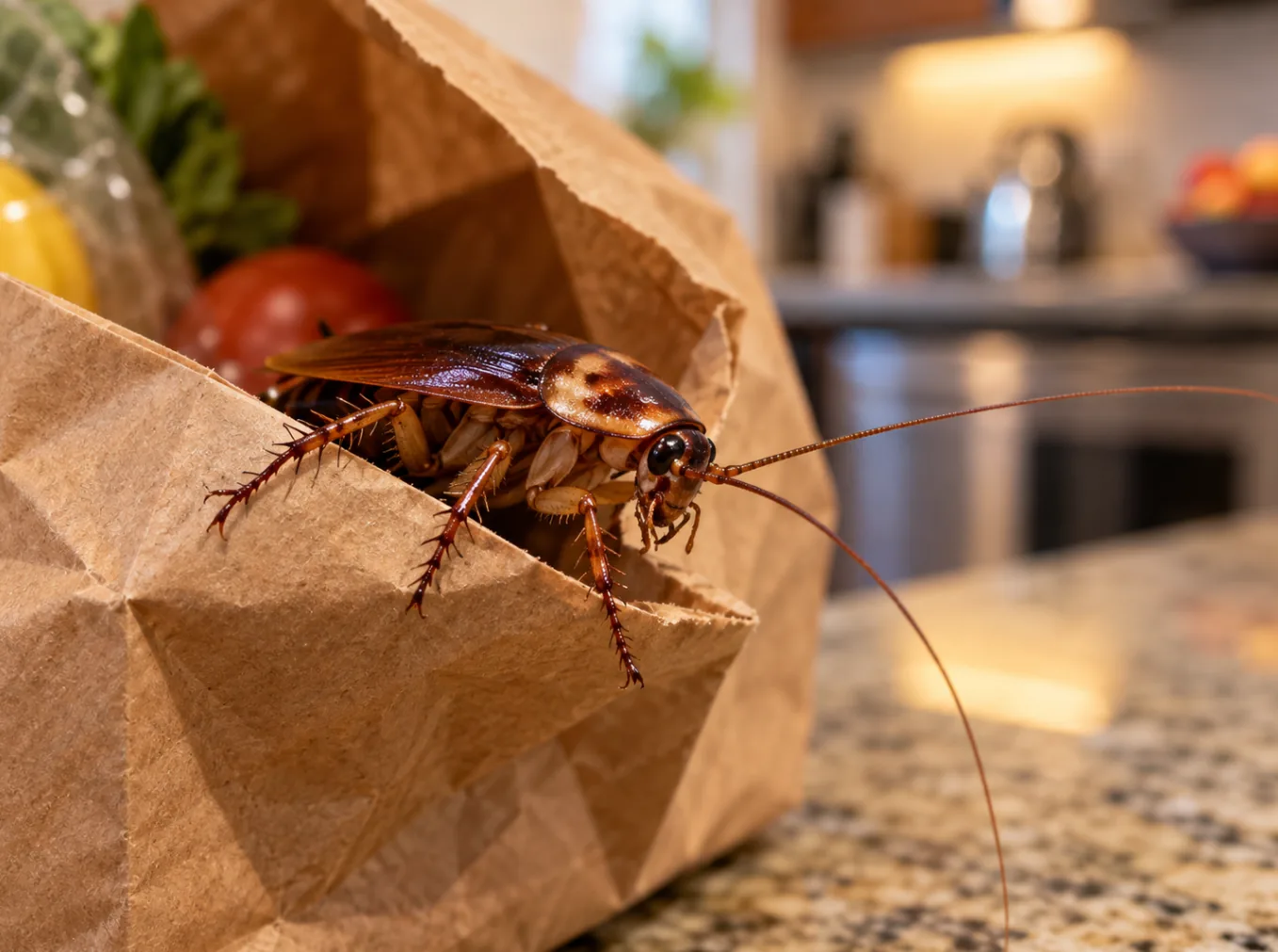
- Grocery bags and bulk food purchases
- Used furniture and appliances, since small roaches hide in warm motors and seams
- Luggage and bags after travel
- Secondhand electronics and other items from infested places
| Entry point | Quick fix |
|---|---|
| Gaps in walls and around pipes | Seal with caulk or sealant |
| Gap under an exterior door | Add a door sweep |
| Torn or missing screens | Repair or replace them |
| Boxes and secondhand items | Inspect before bringing them in |
| Drains that sit unused | Run water through them regularly |
Why do Cockroaches Suddenly Appear?
Cockroaches usually do not show up overnight. Either a hidden group finally became visible, or something changed that sent roaches your way: the weather, a leak, a neighbor’s treatment or a new box in the house.
The most common reasons:
- You were already sharing the space. Roaches are nocturnal and hide in cracks, so a growing group can go unseen for weeks before one wanders out in the open.
- Moisture showed up. A leaky pipe, a damp cabinet or a humid bathroom gives them the water they need. They can last weeks without food but only about a week without water.
- There is easy food. Crumbs, grease, pet food left out overnight, dirty dishes and open trash are enough.
- The weather turned. Cold snaps push outdoor roaches toward warmth, heat waves send them looking for moisture, and heavy rain or flooding drives them out of sewers and nesting spots.
- Something nearby changed. A neighbor’s pest treatment, construction or a plumbing repair can push roaches into your home.
- They hitched a ride. A cardboard box, grocery bag, used appliance or suitcase can carry in a few.
- The house is warm. Kitchens and areas around appliances stay warm, which helps roaches breed.
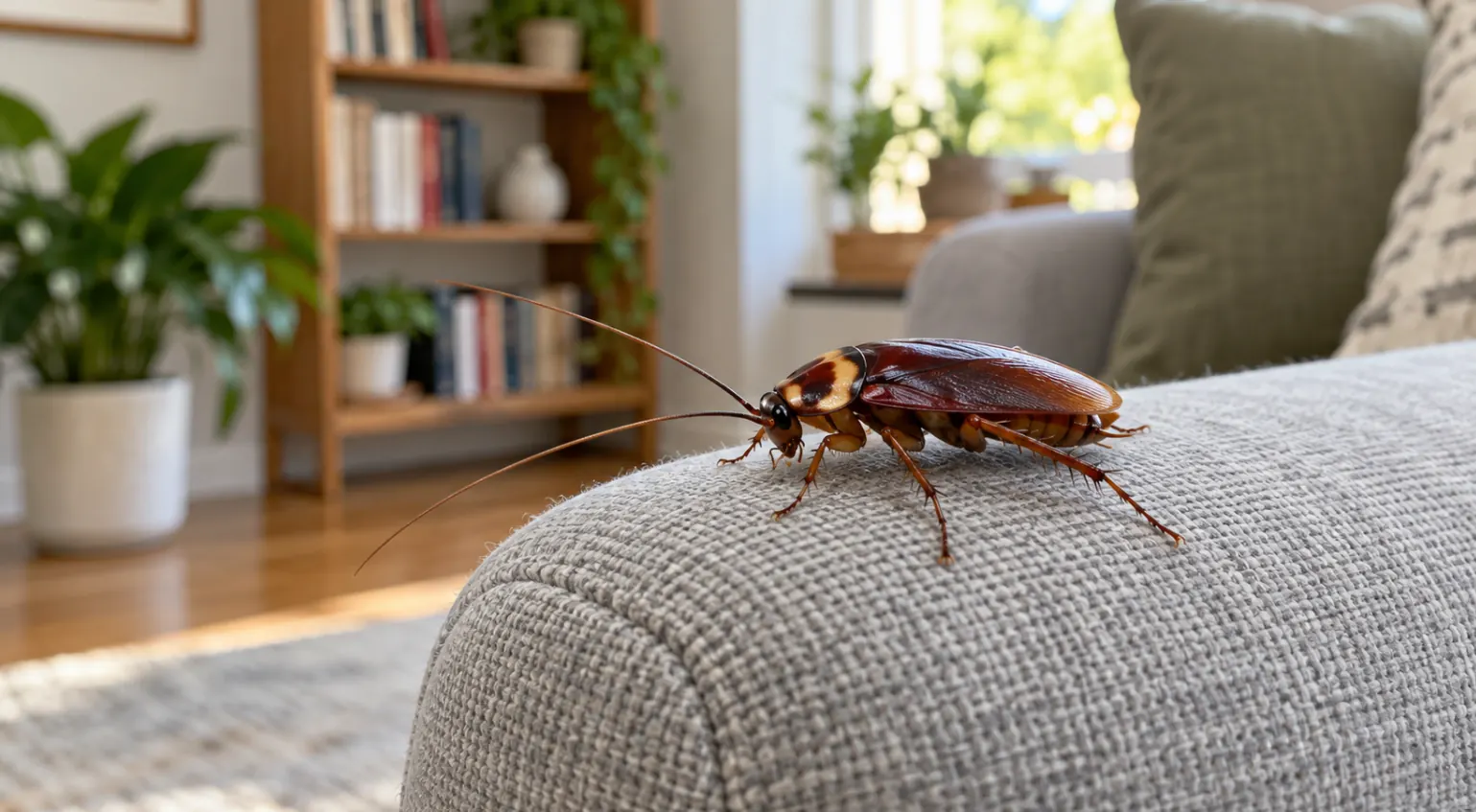
Why Are Cockroaches Called Cockroaches?
The “cockroach” name is an English makeover of a Spanish word. In the early 1600s, English speakers borrowed “cucaracha” and reshaped it into “cockroach”.
Where does the word “cockroach” come from?
- Spanish roots. “Cucaracha” was the Spanish name for a beetle-like crawling insect.
- A possible link to “cuca”. Some word historians connect it to a Spanish word for a caterpillar or grub, though the deeper origin is uncertain.
- Early English use. By the 1620s the word was showing up in English writing. Captain John Smith wrote it as “cacarootch” in 1624, describing an insect that crept into chests and spoiled what was inside.
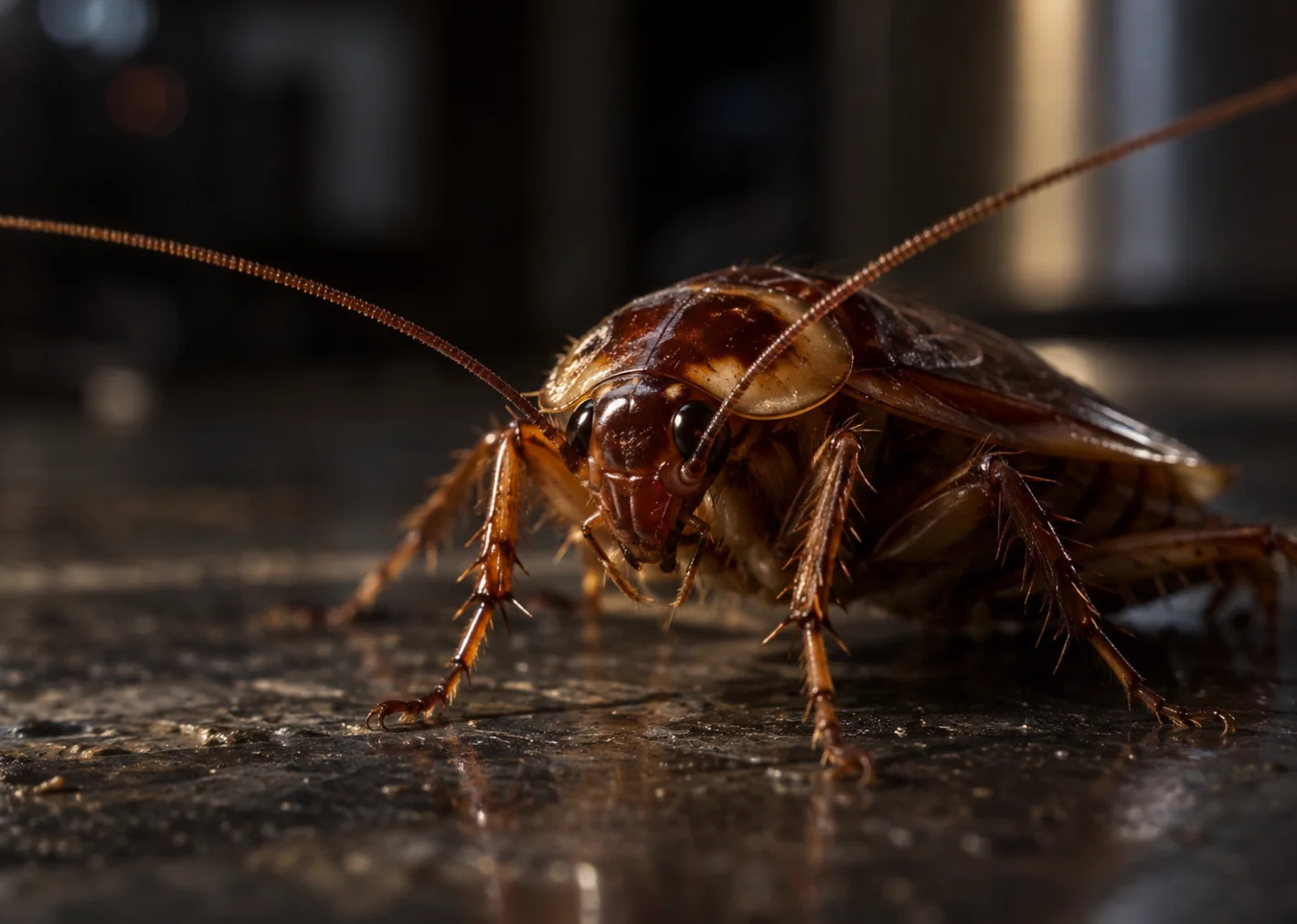
| When | What happened |
|---|---|
| Early 1600s | English borrows “cucaracha” |
| 1620s | Reshaped as “cockroach” |
| 1624 | Smith writes “cacarootch” |
| 1800s | “Roach” in everyday use |
Do Cockroaches Carry Diseases?
Yes, cockroaches can carry germs, though the evidence for specific outbreaks is limited. Lab research has found roaches carrying bacteria such as Salmonella, a parasite that causes amoebic dysentery, and even poliovirus. They also pick up other bacteria, including E. coli, as they move through drains, garbage and sewage.
How roaches spread germs:
- Walking. A roach can crawl through a drain or trash can, then across a countertop, plate or food.
- Droppings. Their waste can contaminate surfaces, utensils and stored food.
- Saliva. Roaches feed on food and leave traces behind.
- Shed skins and body parts. These break down into dust that spreads allergens.
| Source | Problem |
|---|---|
| Droppings | Allergy and asthma trigger |
| Shed skins | Allergens in dust |
| Saliva | Allergens |
| Walking on food | Spreads germs |
Allergies and asthma
The bigger and better-proven health concern is allergy. Cockroach droppings, saliva and shed skins contain allergens that can trigger allergic reactions and asthma attacks, especially in children. The allergens settle in dust, so they can linger even after the roaches are gone.
Are Roaches Dangerous?
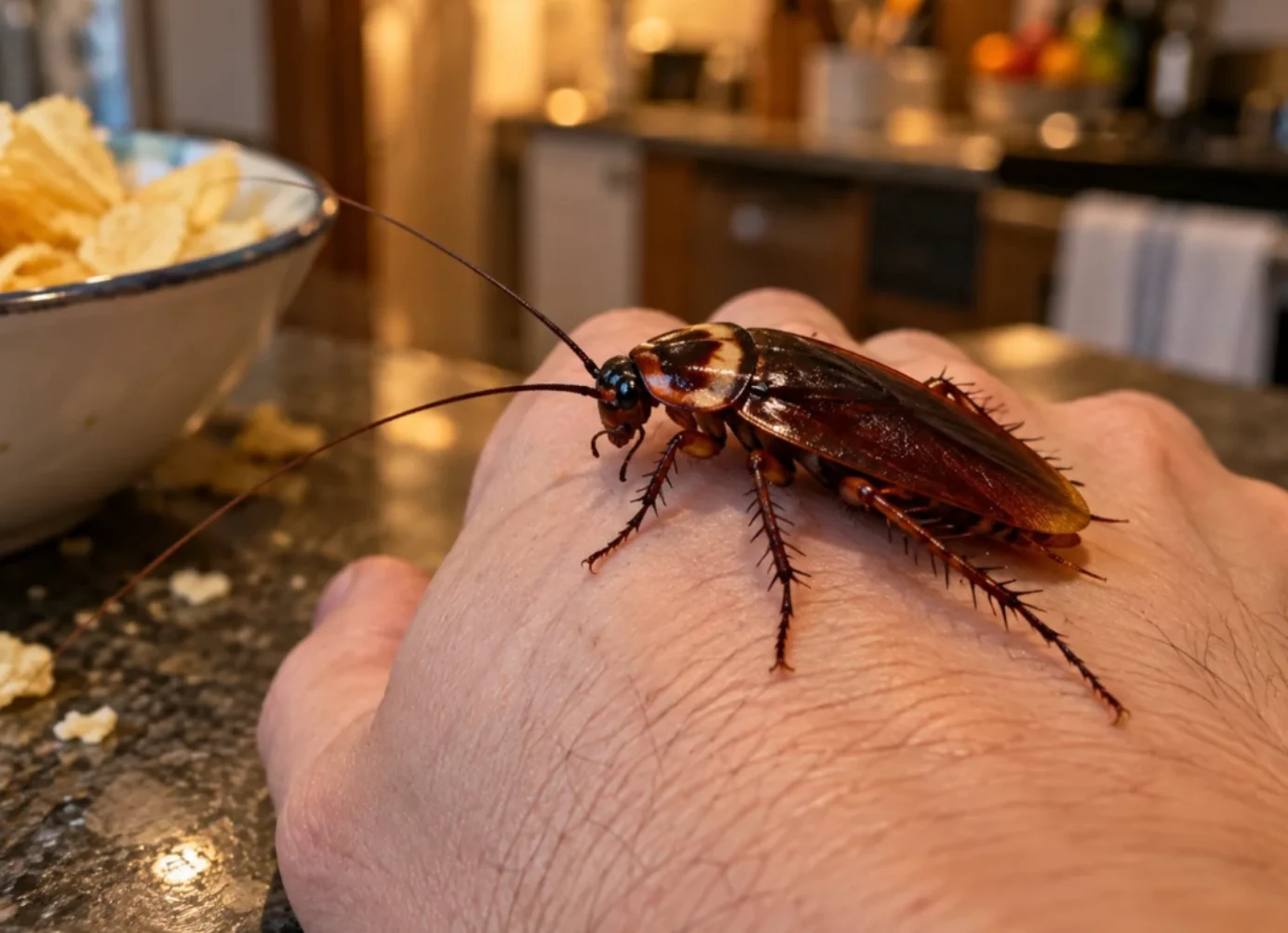
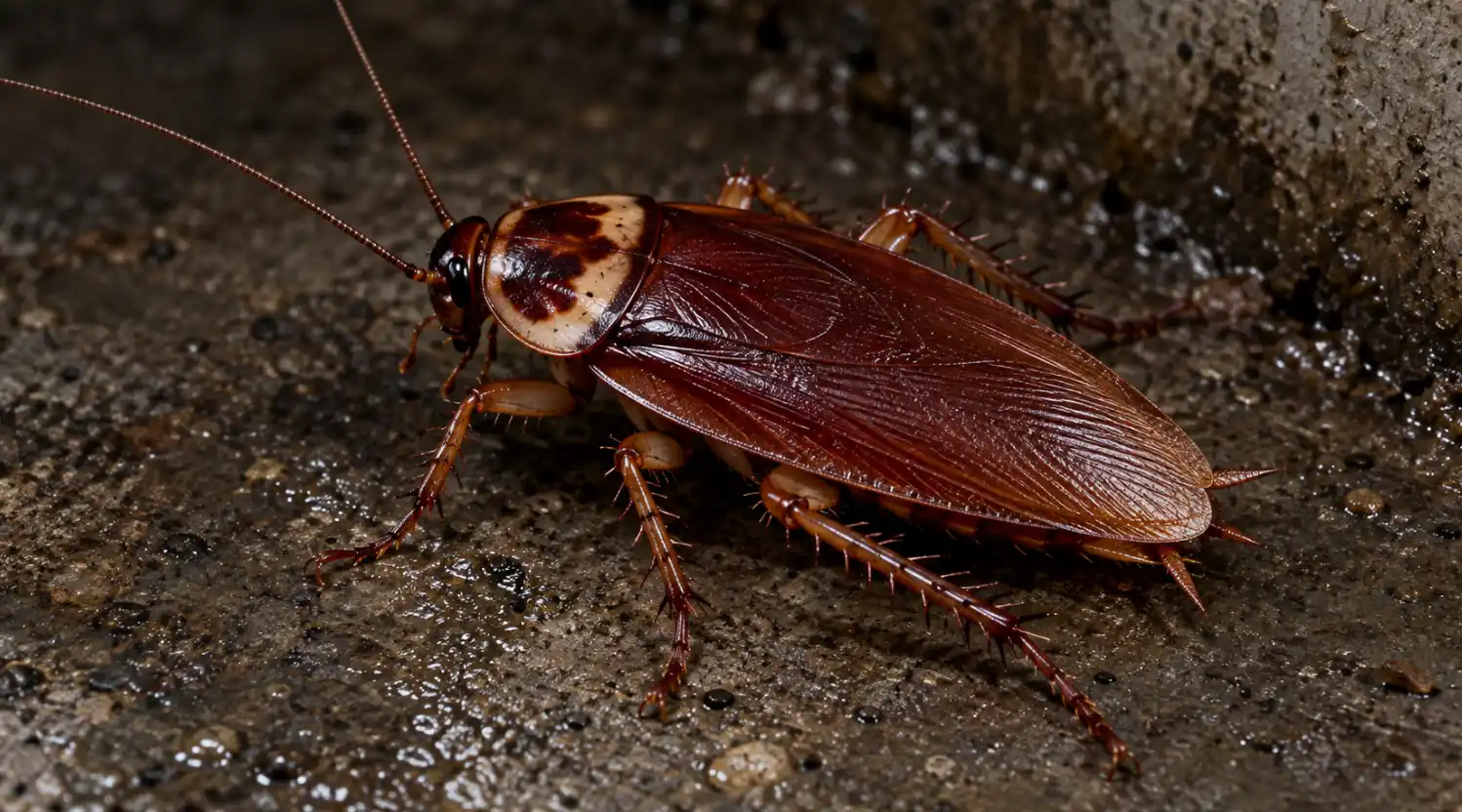
Not directly. Roaches do not attack, sting or carry venom, so you are not in danger from one running across the floor. The real risks are indirect: contaminated food and surfaces, allergy and asthma triggers, and the occasional bite.
How to Keep Roaches Out and When to Call a Professional
Keeping roaches out comes down to three things: take away their food, take away their water, and close the ways in. Together, these do more than any single spray or trap.
How to keep roaches out
Remove food
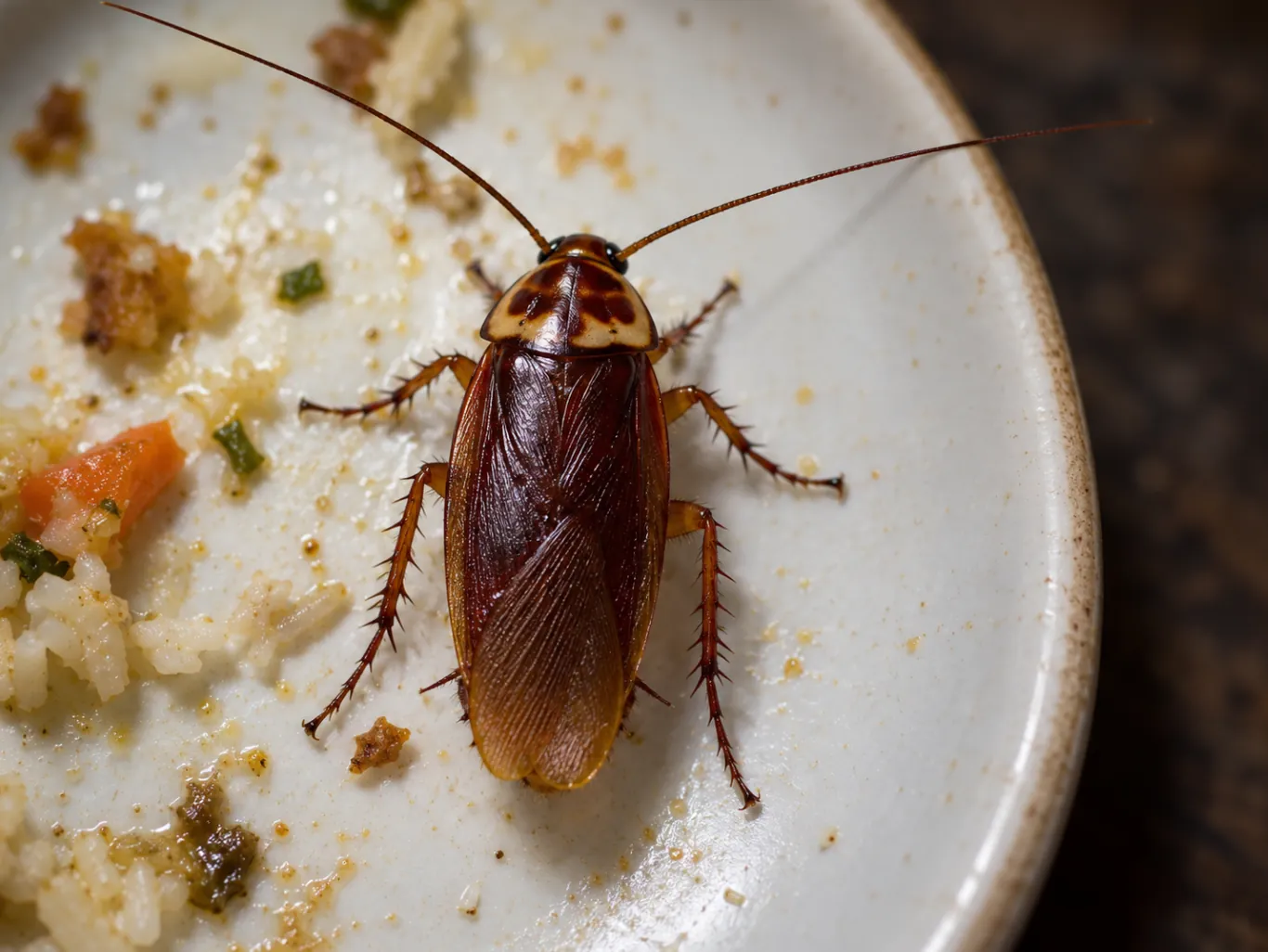
- Store pantry food, pet food and snacks in airtight containers.
- Wipe counters, the stovetop and floors after meals.
- Wash dishes promptly and empty the trash regularly.
Remove water
- Fix leaky pipes, faucets and dripping appliances.
- Dry out sinks and bathtubs before bed.
- Improve ventilation in damp basements, bathrooms and crawl spaces.
Close the ways in
- Seal cracks and gaps around pipes, baseboards and windows.
- Add door sweeps and repair torn screens.
- Check boxes, grocery bags and secondhand items before bringing them inside.
Reduce hiding places
- Get rid of stacks of cardboard, paper and clutter.
- Move firewood and debris away from the house.
- Keep mulch and leaf piles back from the foundation.
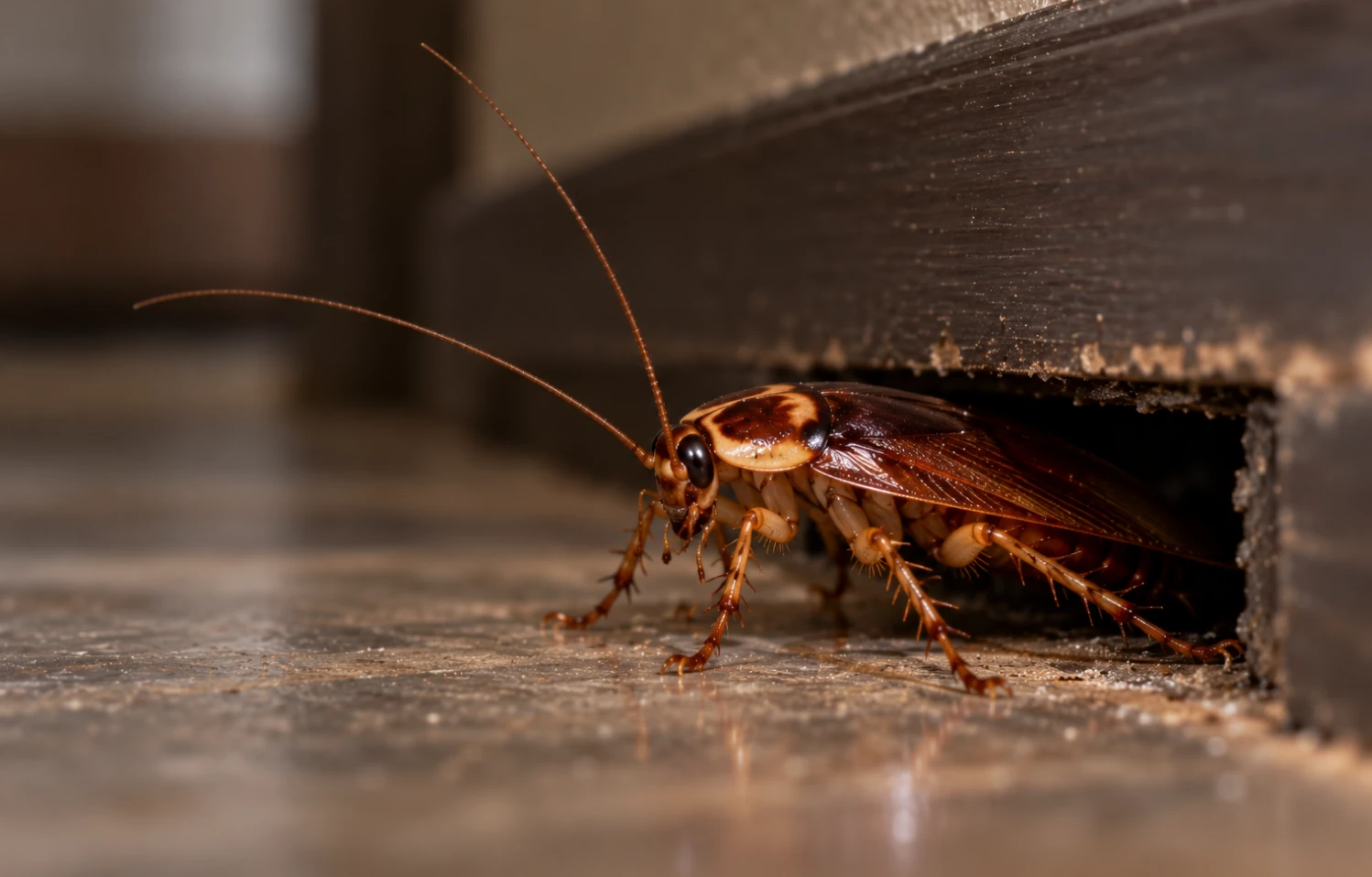
Signs you have an infestation
- Live roaches, especially in the daytime
- Small dark specks or cylindrical droppings near corners, drawers and appliances
- Egg cases, which look like small brown capsules
- Smear marks along walls
- Shed skins
- A stale, musty odor in a closed space
When to Call a Professional
Seeing an occasional cockroach may not seem alarming, but repeated sightings can indicate a larger problem hiding out of view. Contact Green Pest Management if:
- Cockroaches keep appearing despite cleaning and sealing entry points
- You spot roaches during the day or in multiple rooms
- You discover droppings, egg cases, or dark smear marks
- Someone in your household has asthma or allergies
- You live in an apartment or attached home where cockroaches may spread between units
At Green Pest Management, we understand that effective cockroach control starts with identifying the source of the problem. Our technicians inspect common hiding spots and develop a targeted treatment plan based on your property’s needs. We focus on addressing existing activity and reducing conditions that allow cockroaches to return.
Don’t wait for a few cockroaches to turn into a larger infestation. Contact Green Pest Management today to schedule an inspection and take the first step toward a roach-free home.
Cockroach Questions & Answers
What do cockroach eggs look like?
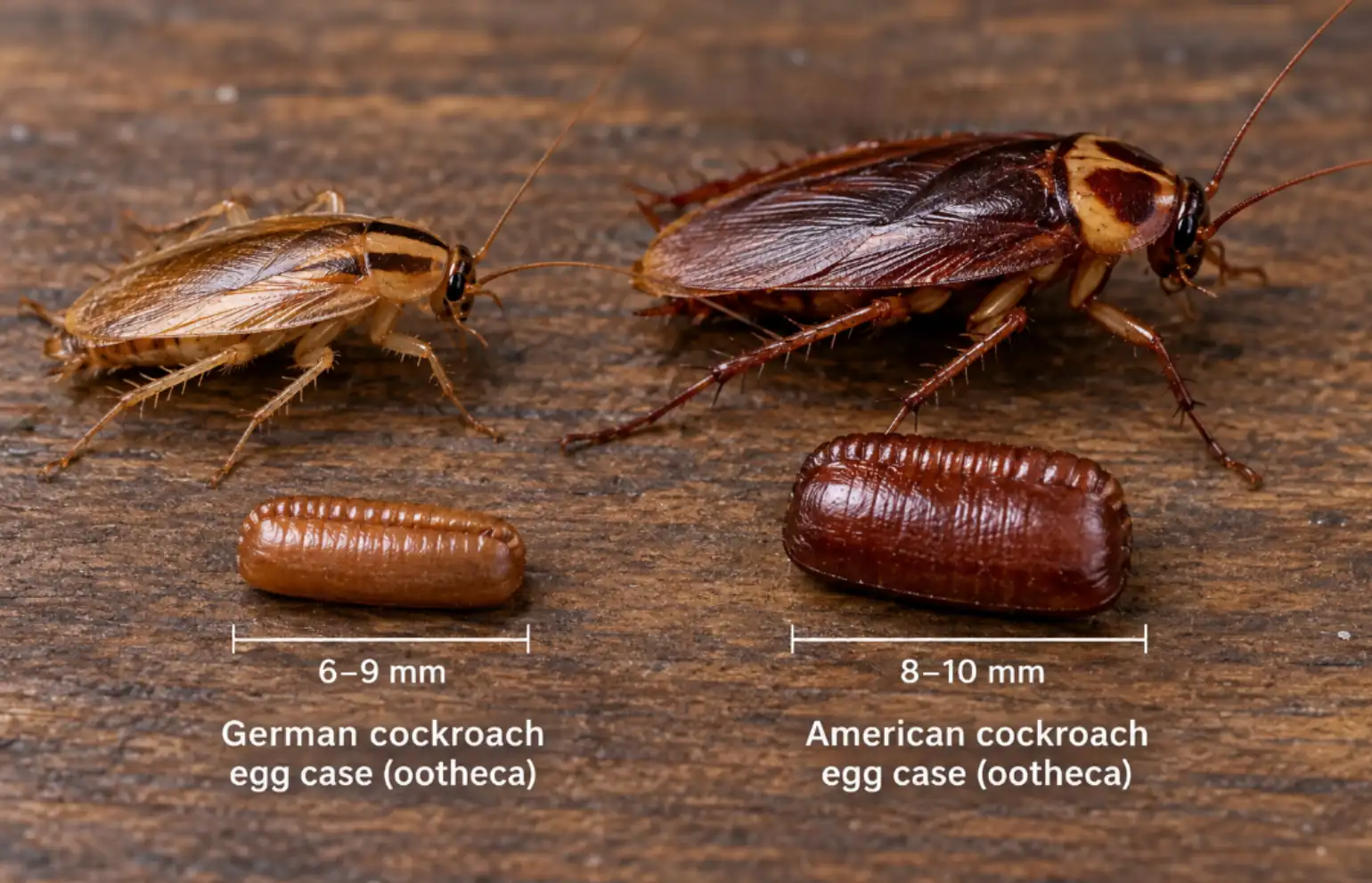
Cockroach eggs look like small, brown, capsule-shaped cases called oothecae, and each case holds many eggs. A German cockroach capsule is under a quarter inch (about 6 mm) long and has ridges along its sides, one for each egg compartment. German females carry the capsule on their abdomen until just before it hatches. American cockroaches glue theirs to a hidden surface.
What do baby roaches look like?
Baby roaches, called nymphs, look like tiny wingless versions of the adults. Newly hatched German cockroach nymphs are under an eighth of an inch (about 3 mm) long and start out white, then darken within hours. They end up dark brown or black with a light stripe down the middle of the back. American cockroach nymphs are grayish brown and turn reddish brown as they grow.
Do all roaches fly?
No, not all roaches fly. Many species have wings but rarely use them, and some have none. Smokybrown, Asian, and Australian cockroaches fly well. American cockroaches can fly short distances but usually run or glide. German cockroaches have wings but almost never fly. Oriental cockroaches cannot fly, and Madagascar hissing cockroaches have no wings.
Are cockroaches beetles?
No, cockroaches are not beetles. Cockroaches belong to the insect order Blattodea, and beetles belong to the order Coleoptera. Beetles go through a larva and pupa stage, while cockroaches hatch as nymphs that look like small adults. Termites are now classified inside Blattodea as well.
Do roaches lay eggs?
Yes, roaches do lay eggs, and they package them in capsules called oothecae. A German capsule typically holds 30 to 40 eggs, and an American capsule holds about 14 to 16. A few species, such as the Madagascar hissing cockroach, hatch their eggs inside the mother and give birth to live young.
Do roaches make noise?
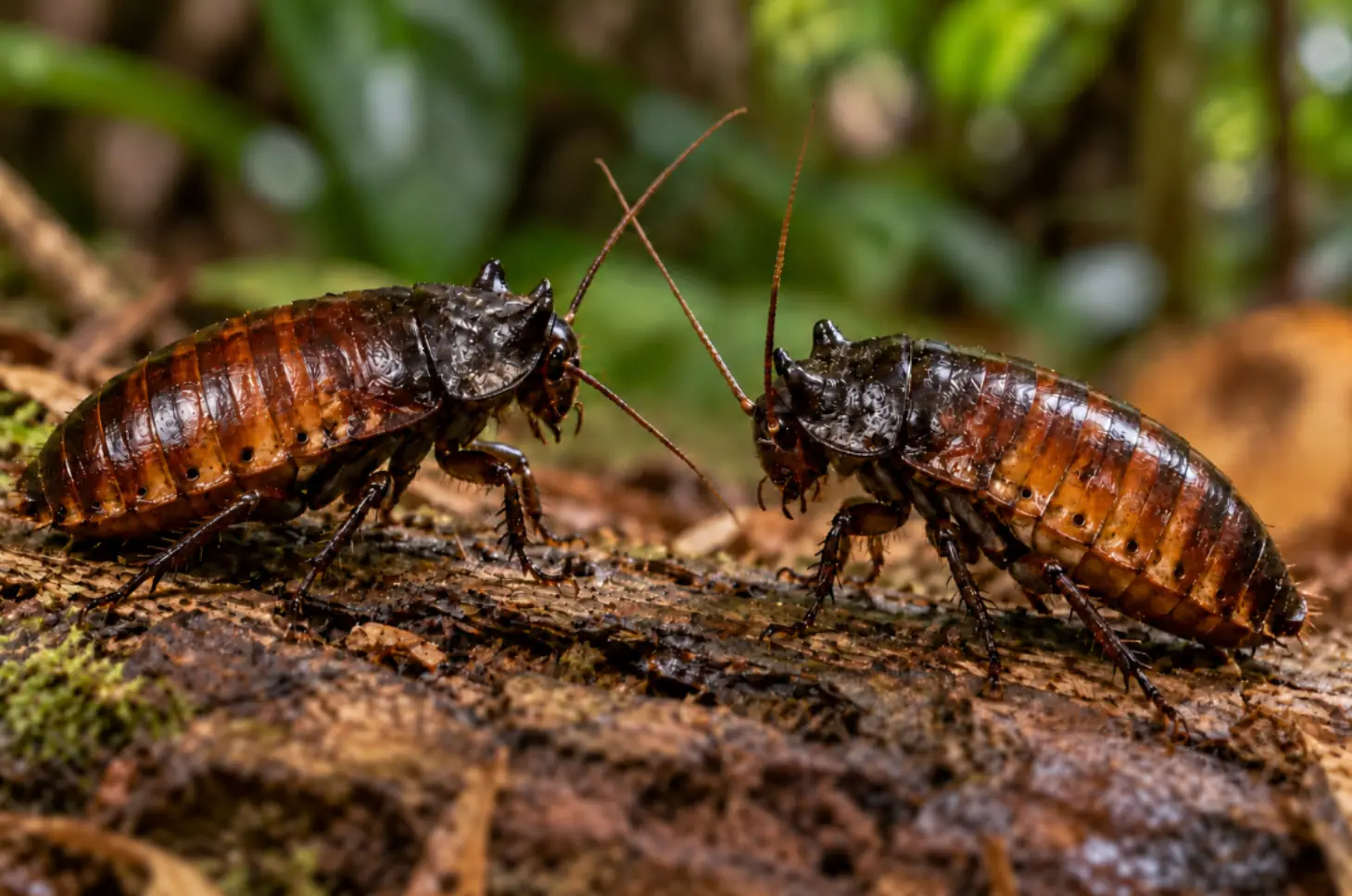
Some roaches do make noise, but common household roach species are quiet. The Madagascar hissing cockroach makes a loud hiss by forcing air out through breathing pores on its abdomen. It hisses when disturbed, when males fight, and during courtship.
What does a roach nest look like?
Roaches do not build nests. They hide in warm, dark, moist spots during the day, such as cracks, crawl spaces, and spaces behind appliances. Signs of a hiding spot include dark droppings or smears, shed skins, and egg cases.
What should you do if you find cockroaches in your house?
Remove food, water, and clutter, and fix leaks. Seal cracks, use sticky traps to monitor activity, and use gel baits or bait stations, which work better than sprays alone. If you still see roaches after a few weeks, call a pest professional.
Can cockroaches hear?
Not in the way people do. Cockroaches have no ears like ours, but two rear appendages called cerci carry sensitive hairs that detect air movement. A puff of air makes a roach turn and run in a fraction of a second.