

Deer Mouse vs. House Mouse: How to Tell the Difference
Deer Mouse vs. House Mouse Differences
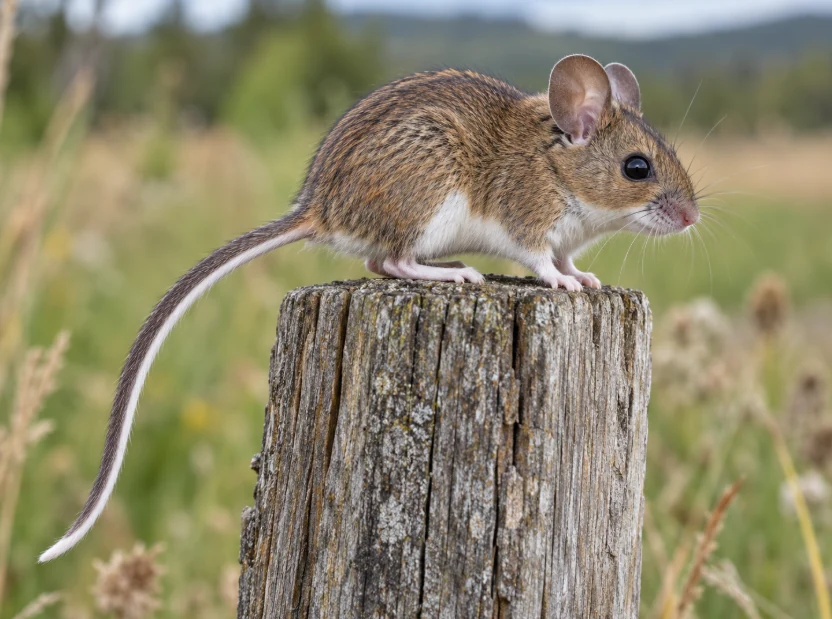
The difference between deer mice and house mice is color, tail, and location. Deer mice usually have brown or gray backs, white bellies and feet, and a furry, two-toned tail. They are more common outdoors in fields and wooded areas, though they sometimes move into garages, sheds, and homes. House mice are gray or light brown with more uniform coloring and a thinner tail with little fur, and they live indoors near people and food.
Take a Closer Look Before You Assume
Found a mouse in your garage, pantry, or basement? Before you assume it is a regular house mouse, take a closer look. Deer mice and house mice can look similar, but there are a few differences that can help you tell them apart.
Why Knowing the Mouse Type Matters
Knowing which mouse you are dealing with matters, especially because deer mice can carry hantaviruses that cause serious illness in people. House mice can also spread germs and contaminate food, so neither is a guest you want sticking around.
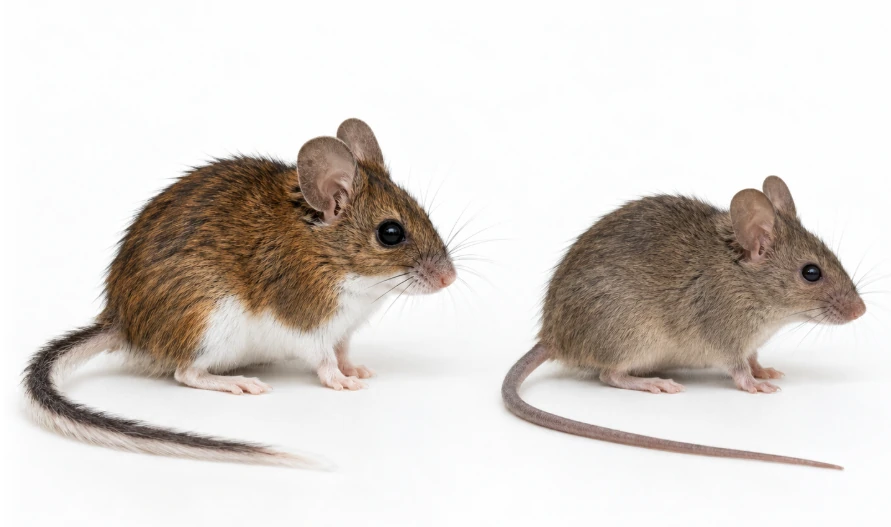
TL;DR: Deer mice and house mice differ in color, tail, and where they live, but both should be dealt with promptly.
- Deer mouse: brown or gray back, white belly and feet, furry two-toned tail, and large eyes. It’s more common outdoors but may move into garages, sheds, and homes.
- House mouse: gray or light brown with uniform coloring and a thinner tail with little fur. It settles indoors near food and shelter and reproduces quickly.
- Health risk: some deer mice carry hantaviruses, and you can’t tell by looking. House mice can contaminate food and spread germs.
- Identification: appearance alone isn’t always enough, and you shouldn’t handle a mouse to get a closer look.
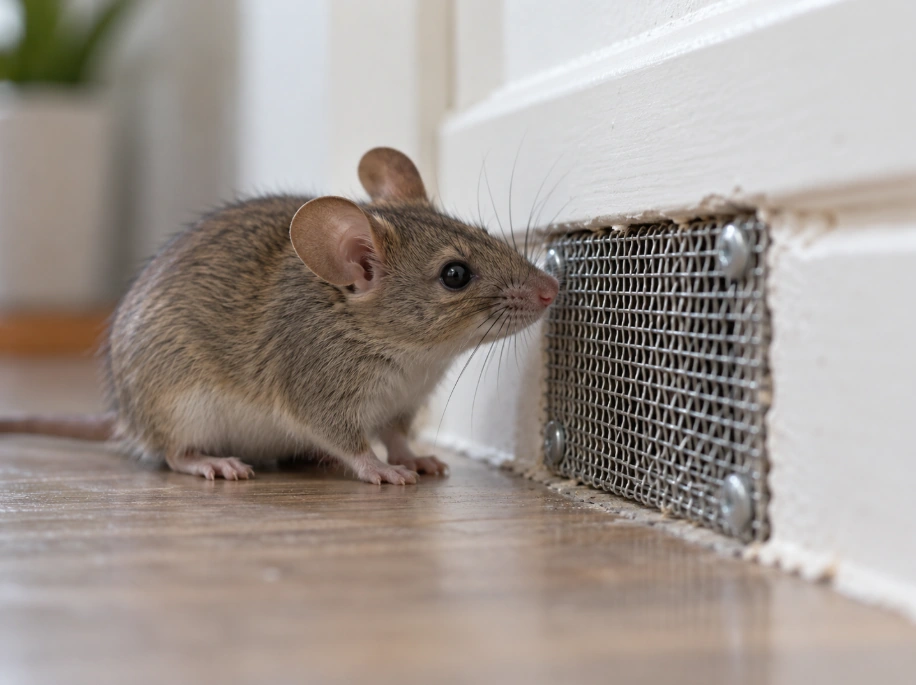
- Entry and prevention: mice get in through gaps around doors, foundations, pipes, vents, and utility lines. Seal openings, store food in sealed containers, and reduce clutter.
- Cleanup: don’t sweep or vacuum droppings. Ventilate the space, wet droppings with disinfectant, and wear gloves.
- When to call a pro: repeated droppings, scratching in the walls, mice in several rooms, or nesting in hard-to-reach spots.
What Does a Deer Mouse Look Like?
Deer Mouse Size and Color
Deer mice usually have brown or gray fur on their backs, white bellies, and white feet. Their tails are furry, with a darker top and lighter underside. They also tend to have large eyes.
Where Deer Mice Live
Unlike house mice, deer mice are more commonly found outdoors in fields, wooded areas, and places with plenty of vegetation. They sometimes move into garages, sheds, cabins, and homes when they find food and shelter.
Where Deer Mice Nest
If you live near open land or have a shed full of boxes you have not touched in months, deer mice are worth keeping in mind. They can nest in stored belongings, insulation, and other quiet spaces.

What Does a House Mouse Look Like?
How to Identify a House Mouse
House mice are usually gray or light brown, with more uniform coloring and a thinner tail with little fur. Their bellies generally are not as sharply white as those of deer mice.
Where House Mice Live
They are well adapted to living around people, which is why you might find them behind appliances, inside cabinets, in closets, or near stored food.
How House Mice Get In and Multiply
House mice can squeeze through surprisingly small openings around pipes, doors, and foundations. They also reproduce quickly, so seeing one mouse more than once is a good reason to check for others.
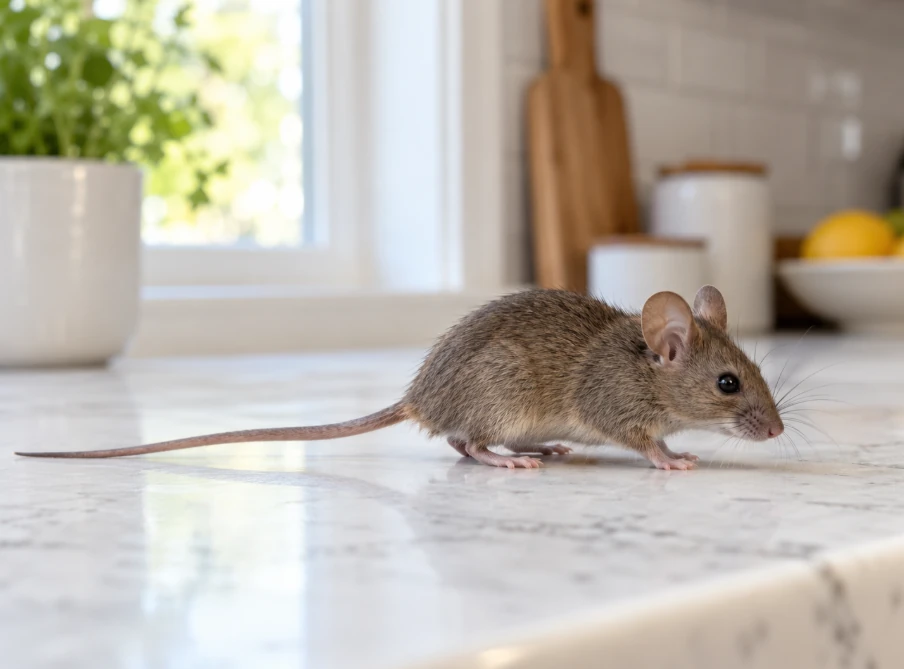
Deer Mouse vs. House Mouse: What’s the Difference?
Color and Tail Clues
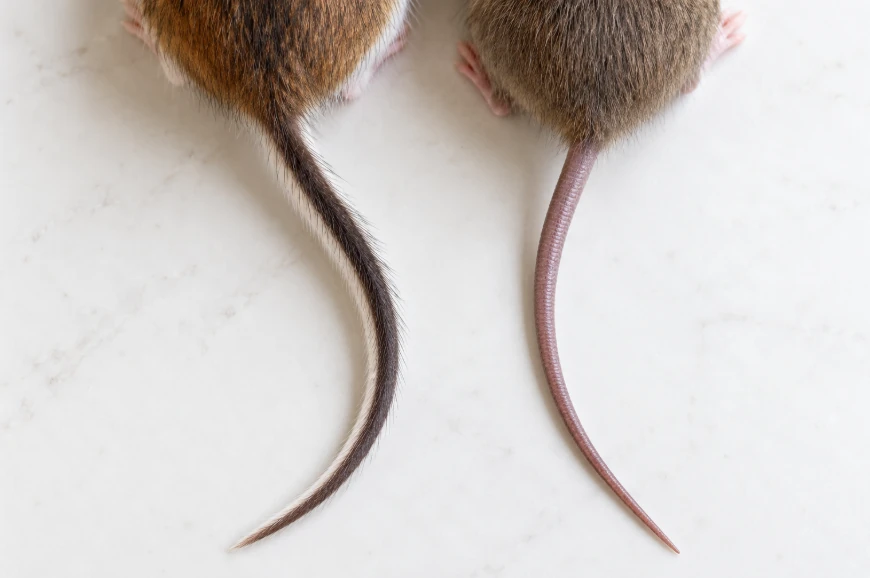
The easiest clues are color, tail, and location. Deer mice usually have a white belly, white feet, and a furry two-toned tail. House mice tend to have more uniform coloring and a thinner-looking tail.
Location Clues
Where you find the mouse can also help. Deer mice are more closely associated with outdoor habitats and may enter buildings near fields or wooded areas. House mice are more likely to settle indoors wherever food and shelter are easy to find.
Why Appearance Isn’t Always Enough
Appearance alone is not always enough to identify a mouse with certainty, since other mouse species can look similar. Avoid handling a mouse just to get a better look.

Are Deer Mice Dangerous?
Hantavirus Risk From Deer Mice
Deer mice deserve extra caution because some carry hantaviruses. People can become infected by breathing in contaminated particles from rodent urine, droppings, or nesting materials.
Not Every Deer Mouse Is Infected
That does not mean every deer mouse carries the virus, and you cannot tell whether one is infected by looking at it. Still, it is best to be careful around wild mice and their droppings.
How to Clean Up Droppings Safely
If you find droppings in a garage, attic, or storage area, do not sweep or vacuum them. The Centers for Disease Control and Prevention recommends ventilating enclosed spaces and thoroughly wetting droppings with an appropriate disinfectant before wiping them up. Wear gloves and follow the CDC’s cleanup instructions, especially if there is a heavy infestation.
House mice can also contaminate food and surfaces, so it is worth addressing either type of mouse promptly.

How Do Mice Get Into Your House?
Common Mouse Entry Points
Mice can enter through:
- Gaps around doors
- Foundations
- Pipes
- Vents
- Utility lines
A damaged garage door seal or a small opening around plumbing may be all they need.
What Attracts Mice Indoors
Once inside, mice look for food and somewhere to hide. These common items can make your home more appealing to them:
- Open bags of pet food
- Birdseed
- Crumbs
- Piles of cardboard

How to Keep Mice Out
In order to keep mice away from your home:
- Store food in sealed containers
- Clean up spills
- Reduce clutter
- Check the outside of your home for holes
- Seal openings with suitable rodent-resistant materials
- Make sure doors close tightly
If you live near fields or wooded areas, check your garage and shed regularly, especially if they stay closed for long periods.
How to Get Rid of Mice in Your Home
Start With Entry Points and Food
Getting rid of mice starts with figuring out where they are getting in. Traps can help reduce their numbers, but sealing entry points and removing easy access to food are just as important if you want to keep them from returning.
Using Traps and Rodenticides Safely
Place traps where you have noticed mouse activity, and keep them out of reach of children and pets. Be careful with rodenticides, which can pose risks to pets and wildlife if used improperly.
Signs You Need a Professional Inspection
If you keep finding droppings, hear scratching in the walls, or see mice in several rooms, a professional inspection can help determine how widespread the problem is.
Professional Mouse Control and Pets
Green Pest Management can assess rodent activity and discuss suitable treatment options. If you have pets, mention them before service and ask what precautions are needed. Green Pest Management or your local pest control company can explain the available options and how to reduce risks to pets during treatment. Always follow product-label instructions rather than assuming any treatment is completely safe for every animal.
Flea and Tick Treatments
You can also ask about other pest concerns around your property, including flea control and tick yard treatments, if those services are available in your area.

When Should You Call Pest Control?
One Mouse vs. a Bigger Problem
Finding one mouse is a reason to check for entry points.
The following signs suggest there may be a bigger problem:
- Finding fresh droppings repeatedly
- Hearing scratching
- Spotting mice in several areas
Hard-to-Reach Nests and Suspected Deer Mice
It is especially important to get help if mice are nesting somewhere difficult to reach or if you suspect deer mice in an area with a lot of droppings or nesting material.
Precautions Before You Know the Species
You do not have to identify the exact species before taking precautions. Keep your distance, avoid stirring up droppings, and focus on keeping more mice from getting inside.
Why Acting Early Helps
The sooner you address the problem, the less time mice have to settle in. Your garage should be for tools and holiday decorations, not an uninvited rodent neighborhood.

Mice: Questions & Answers
Are House Mice Dangerous?
Yes, house mice are dangerous, mainly because they contaminate food and surfaces with droppings and urine and can spread bacteria. Their droppings and dander may also trigger allergies and asthma in some people. They gnaw on wiring and insulation too, though they rarely bite unless handled or cornered.
How Big Do House Mice Get?
House mice get about 2.5 to 3.5 inches long, not counting a tail of roughly 3 to 4 inches. Adults weigh only about half an ounce to just under an ounce. This small size lets them squeeze through very small gaps.
How Long Do House Mice Live?
House mice live about one year in the wild, and many live less because of predators, cold, and food shortages. Indoors, with steady food and shelter, they may live longer. A female can have many litters a year, so one mouse can quickly become an infestation.
What Does a Deer Mouse Look Like?
A deer mouse looks like a small brown or gray mouse with a white belly, white feet, and large eyes. Its furry tail is darker on top and lighter underneath, unlike the thinner, nearly hairless tail of a house mouse. The body is usually about 3 to 4 inches long, with a tail of similar length.
What Are Deer Mice?
Deer mice are small wild rodents found across North America in fields, forests, and grasslands. They eat mostly seeds, nuts, fruits, and insects, and sometimes move into garages, sheds, and homes. Some carry hantaviruses, so avoid disturbing their droppings and nests.
Sources
- University of California Statewide Integrated Pest Management Program, Deer Mouse
- University of California Statewide Integrated Pest Management Program, House Mouse
- Centers for Disease Control and Prevention, Hantavirus Prevention
- Centers for Disease Control and Prevention, Controlling Wild Rodent Infestations