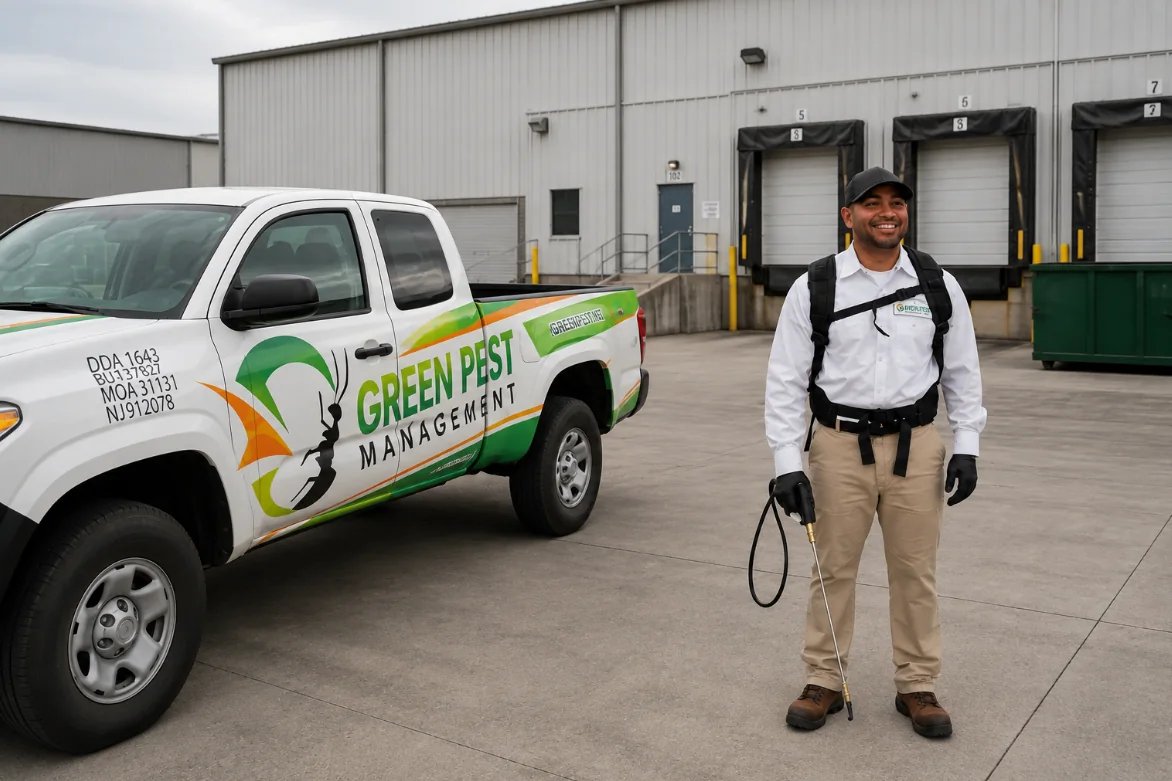
Warehouse Pest Control
Keep Your Inventory And Staff Safe With Commercial Pest Control Services
Protect Your Property With Warehouse Pest Control
At Green Pest Management, we understand that warehouse owners and operators have unique needs. Warehouses provide a welcoming environment for many different types of pests. In many cases, you may not discover an infestation until it gets out of control. To make matters worse, unlike other businesses, your inventory likely isn’t your own. As a result, this means that you need to take extra precautions to ensure that everything, and everyone, stays safe. If you’ve noticed pests in your warehouse, contact the exterminators at Green Pest Management to schedule a free warehouse inspection. Allow us to provide you a warehouse pest control solution to fit your needs.
What pest issue are you facing in your warehouse?


Why Choose Green Pest Management To Provide You With Warehouse Pest Solutions?
- We proudly offer free, no-risk inspections that allow you to understand the extent of the problem and how we can help.
- We’re locally owned and treat our community like family.
- Affiliations with the National Pest Management Association, Home Advisory Association, Better Business Bureau Association, and many other organizations
- We provide clear pricing with no hidden rates or fees—your business is our top priority!
- We offer discreet services that allow you to maintain your reputation.


Customized Warehouse Treatment Plans

Safe Methods That Protect Your Inventory

Your Satisfaction Is Always Guaranteed

Free Follow-Up Treatment and Support If Needed
Keeping Pests Out Doesn’t Have To Be Daunting
At Green Pest Management, we understand that keeping pests out of your warehouse can be a daunting task. Maybe you store food-related items and you’ve noticed gnaw marks on boxes, pests scurrying around the premises, or perhaps you’ve received complaints from purchasers that your goods are contaminated. In addition to paying for spoiled products—bad reviews could irreparably damage your reputation with a failed health inspection. Whatever your circumstances may be, it’s important to treat the problem at the source and prevent it from recurring.
At Green Pest Management, we have more than 25 years of experience and have provided countless business owners with warehouse pest control services. If you call our exterminators for commercial pest control, we will provide you with a customized plan that addresses the current infestation and prevents future ones from occurring.

The Best Defense Is A Good Offense
You have a lot on your plate as a warehouse owner or operator. In addition to managing your day-to-day operation, you’re tasked with keeping your staff members and inventory safe. Although some pests will damage your inventory but don’t pose any serious health risks, warehouses are an ideal environment for pests that do. Rodents and spiders are two of the most common, and you don’t want anyone’s health compromised on the job.
Whether you’re concerned about ants, termites, mice, spiders, or another kind of pest, our exterminators will ensure that your property is protected now and in the future.
Don’t Wait Until It’s Too Late
At Green Pest Management, we’ve seen far too many warehouses have their reputations damaged by pest infestations. Allow us to prevent and treat your problem early on. If you’ve noticed anything unusual on your property such as droppings, gnaw marks, shed wings, or another sign of a pest, call our commercial pest control experts to schedule a free inspection.
We work discreetly and on your schedule to ensure that you get the services you need to keep things running smoothly and, more importantly, protect your inventory and your staff from harmful pests.
We’re standing by to help—don’t let another day go by with your warehouse’s reputation on the line.
Warehouse Pest Control – Q&A
How to Control Rats in a Warehouse?
The best way to control rats in a warehouse is to combine sanitation, exclusion, monitoring, and targeted removal methods. Food spills, damaged products, standing water, and accessible waste should be cleaned up quickly because these resources can support rat activity. Gaps around doors, loading docks, pipes, vents, and utility lines should be sealed with durable materials that rats cannot easily gnaw through. Stored goods should be kept organized and raised off the floor so employees can inspect walls, corners, and pallet areas. Traps and monitoring devices should be placed along travel routes, especially near walls, entrances, storage zones, and waste areas. Rodenticides may be used in some situations, but they must be handled carefully and in accordance with label directions and applicable regulations. A licensed commercial pest professional can identify the rat species, locate nesting areas, and develop a safer control plan. Long-term rat control depends on correcting the conditions that allowed the infestation to develop.
Are Rats Common in Warehouses?
Yes, rats can be common in warehouses when food, water, shelter, and entry points are available. Warehouses often contain loading docks, large doors, wall openings, drains, and utility penetrations that rats may use to enter. Cardboard, insulation, stored materials, and quiet spaces can provide protected nesting areas. Food warehouses are particularly attractive, but rats may also enter nonfood facilities in search of warmth and shelter. Norway rats usually remain close to ground level, while roof rats are more likely to climb and occupy elevated spaces in regions where they occur. Their presence may be difficult to notice because rats are mainly active at night and often travel along walls or concealed pathways. Common warning signs include droppings, gnaw marks, tracks, greasy rub marks, damaged packaging, and scratching noises. Rat activity varies by location, season, building condition, sanitation, and the surrounding environment.
Why Is Warehouse Pest Control Important?
Warehouse pest control is important because pests can damage products, packaging, equipment, and building materials. Rodents may gnaw through cartons, insulation, wiring, and stored goods, creating financial losses and possible safety hazards. Insects can infest food, animal feed, fabrics, wood, paper, and other stored materials depending on the species involved. Pest droppings, urine, shed skins, hair, and body fragments can also contaminate products or storage surfaces. Routine inspections help detect low-level activity before it spreads through multiple pallets or storage zones. Pest management records can support quality-control programs, customer requirements, and regulatory inspections in certain industries. Visible pest activity may also damage a company’s reputation and reduce customer confidence. Effective warehouse pest control protects inventory, supports sanitation, and helps prevent costly operational disruptions.
What Are Some Common Pests Found in a Warehouse?
Some common warehouse pests include rats, mice, cockroaches, ants, flies, beetles, moths, and spiders. Stored-product beetles and moths may infest grains, flour, cereal, seeds, spices, pet food, and other dry materials. Cockroaches often gather near moisture, food residue, drains, break rooms, and warm equipment areas. Rats and mice may enter through loading docks, wall gaps, doors, vents, and utility openings. Flies can develop near waste, drains, spills, decaying material, or poorly maintained outdoor areas. Ants may enter while searching for food or water, especially around kitchens, vending areas, and damaged packaging. Spiders usually enter while following insect prey and may be more common in quiet corners or near exterior lighting. The exact pests found in a warehouse depend on the stored products, local climate, building design, sanitation, and nearby properties.
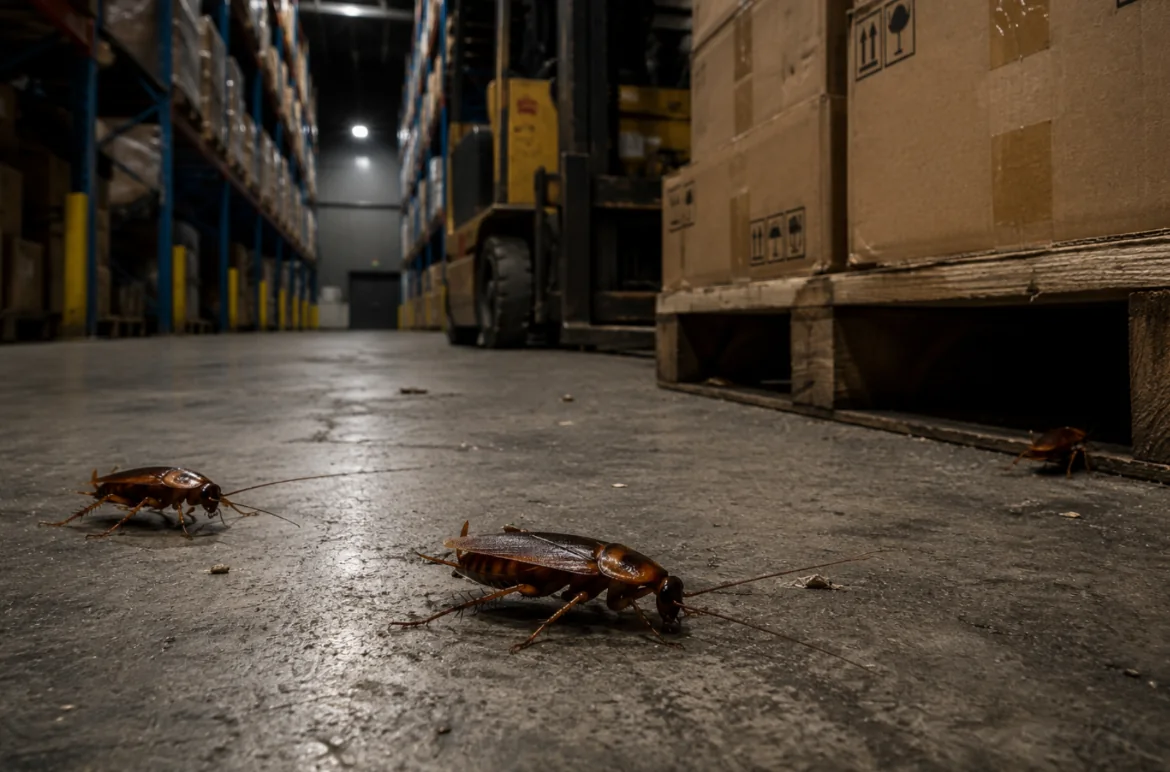
How Often Should Pest Control Inspections Be Done in a Warehouse?
Pest control inspections in a warehouse should usually be performed at least once a month, although higher-risk facilities may need more frequent visits. Food warehouses, distribution centers, and buildings with previous pest activity may benefit from weekly or biweekly monitoring. The inspection schedule should reflect the products stored, building condition, local climate, and surrounding pest pressure. Warehouse employees should also watch for droppings, damaged packaging, insects, gnaw marks, and unusual odors during daily operations. Loading docks, break rooms, waste areas, drains, wall edges, and storage racks should receive particular attention. Inspection records help identify patterns and show whether control measures are working. The frequency should increase whenever new pest activity is detected. Regular inspections are more effective than waiting until a visible infestation develops.
How to Get Rid of Pests in a Warehouse?
The best way to get rid of pests in a warehouse is to identify the species and correct the conditions allowing it to survive. Food spills, standing water, damaged goods, open waste, and clutter should be removed promptly. Cracks, gaps around pipes, damaged doors, and openings near loading docks should be sealed with durable materials. Stored products should be kept organized and raised off the floor to improve inspection and cleaning access. Traps, monitoring devices, baits, and other treatments should be chosen for the specific pest involved. Pesticides must be used according to label directions and kept away from products that could become contaminated. Serious or recurring infestations usually require help from a licensed commercial pest control professional. Long-term control depends on sanitation, exclusion, monitoring, and regular maintenance rather than a single treatment.
Why Are There Rats in a Warehouse?
Rats may enter a warehouse because it provides food, water, shelter, and protected nesting areas. They can gain access through loading docks, damaged doors, wall openings, drains, vents, and gaps around utility lines. Food spills, discarded products, pet food, seeds, or improperly stored waste can attract rats. Cardboard, insulation, pallets, and quiet storage zones may provide nesting material and concealment. Leaking pipes, condensation, and standing water can also support rat activity. Norway rats usually remain close to the ground, while roof rats are more likely to climb and occupy elevated areas where that species is present. Signs of activity include droppings, gnaw marks, rub marks, tracks, damaged packaging, and nighttime noises. Effective rat control requires removing attractants, sealing entry points, improving storage practices, and using targeted trapping or other professional methods.
Cited Sources
Centers for Disease Control and Prevention. (2024, April 8). Controlling wild rodent infestations. https://www.cdc.gov/healthy-pets/rodent-control/ (CDC) (CDC)
U.S. Environmental Protection Agency. (2025, September 2). Integrated pest management principles. https://www.epa.gov/safepestcontrol/integrated-pest-management-ipm-principles (U.S. EPA) (US EPA)
U.S. Food and Drug Administration. (n.d.). Current Good Manufacturing Practices (CGMPs) for food and dietary supplements. https://www.fda.gov/food/guidance-regulation-food-and-dietary-supplements/current-good-manufacturing-practices-cgmps-food-and-dietary-supplements (U.S. FDA) (U.S. Food and Drug Administration)
U.S. Department of Agriculture, Agricultural Research Service. (n.d.). Stored Product Insect and Engineering Research. https://www.ars.usda.gov/plains-area/mhk/cgahr/spieru/ (USDA ARS) (ars.usda.gov)